LAWS
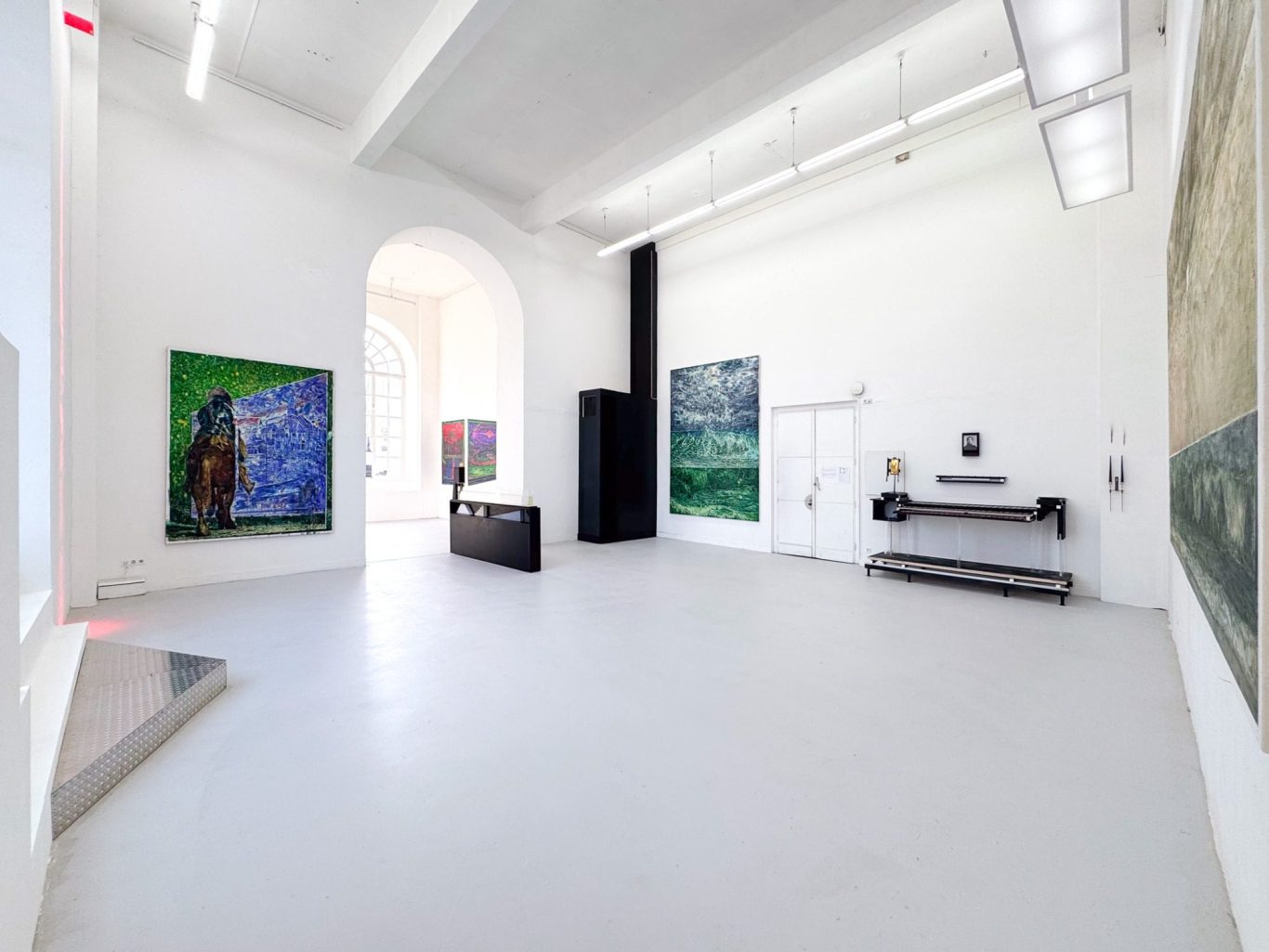
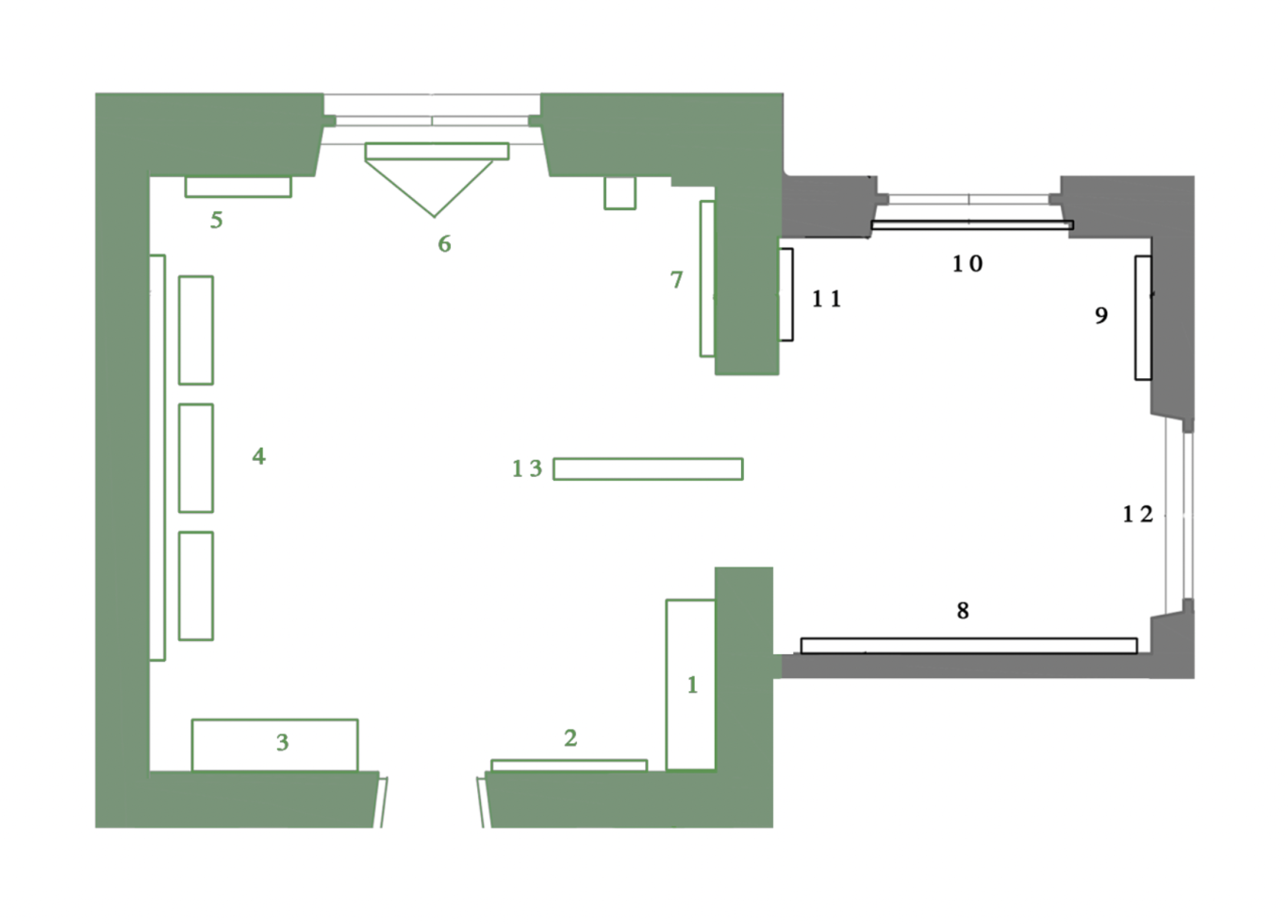
2025 Kunstakademie Düsseldorf Room 001
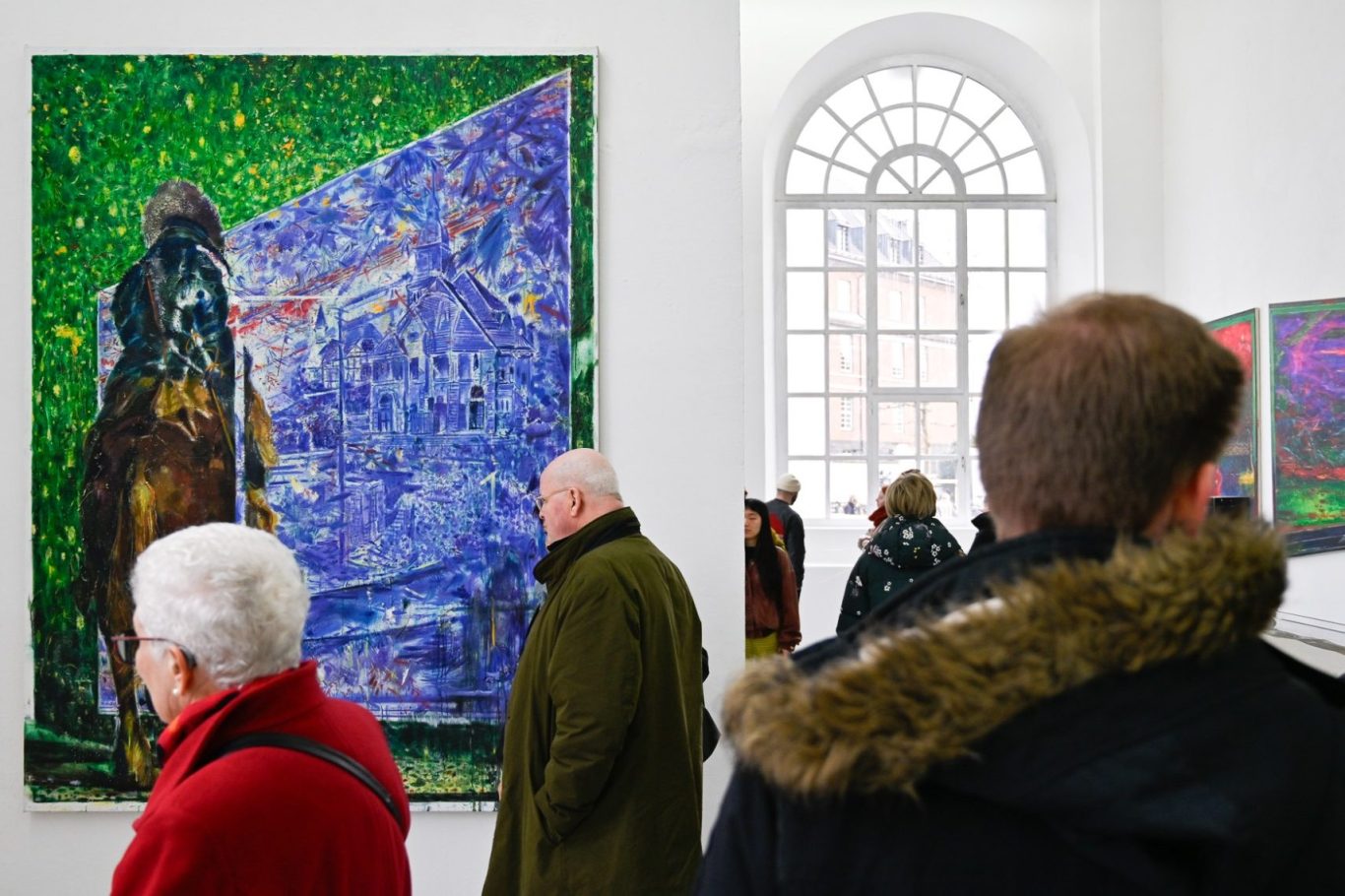
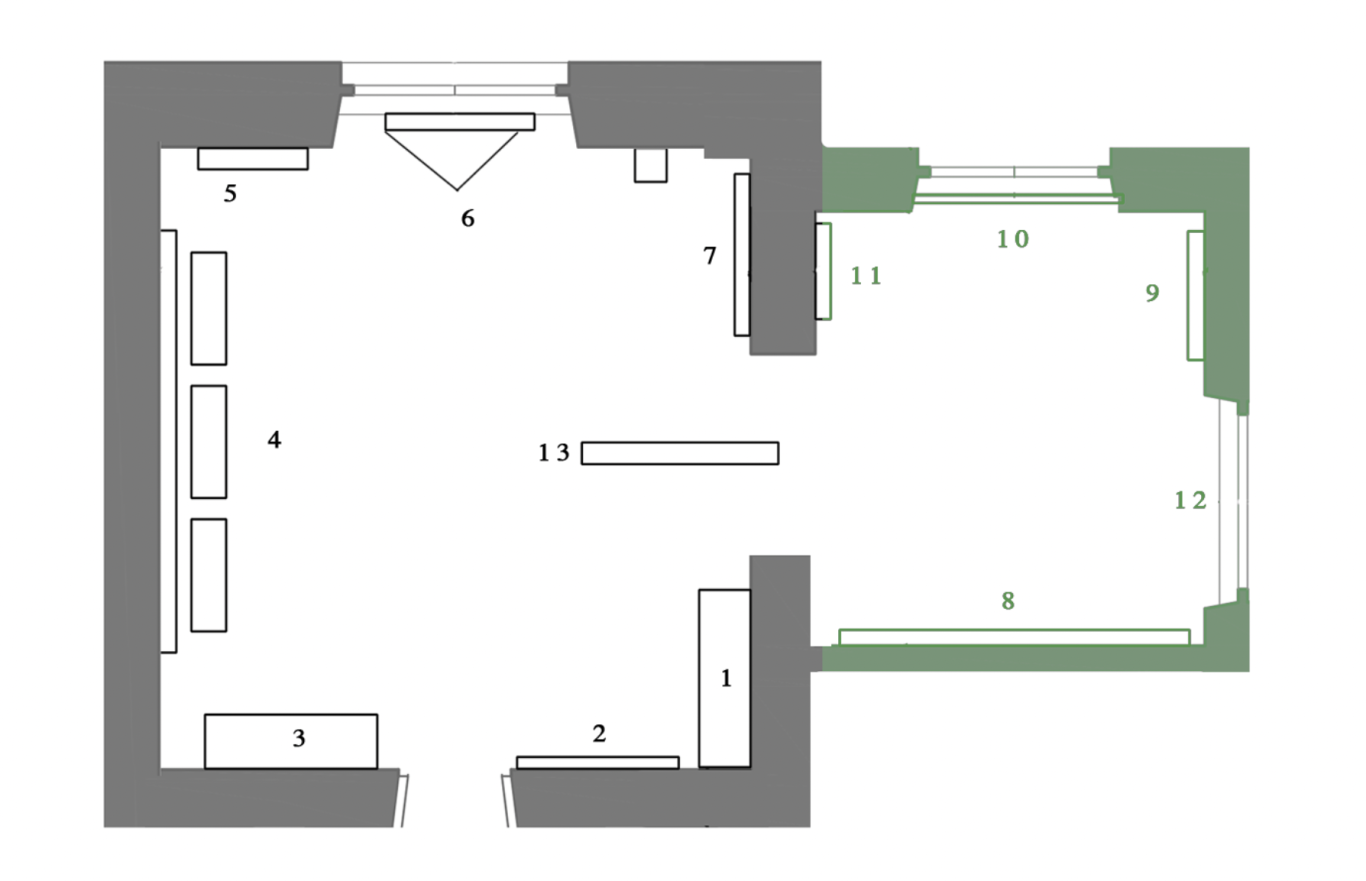
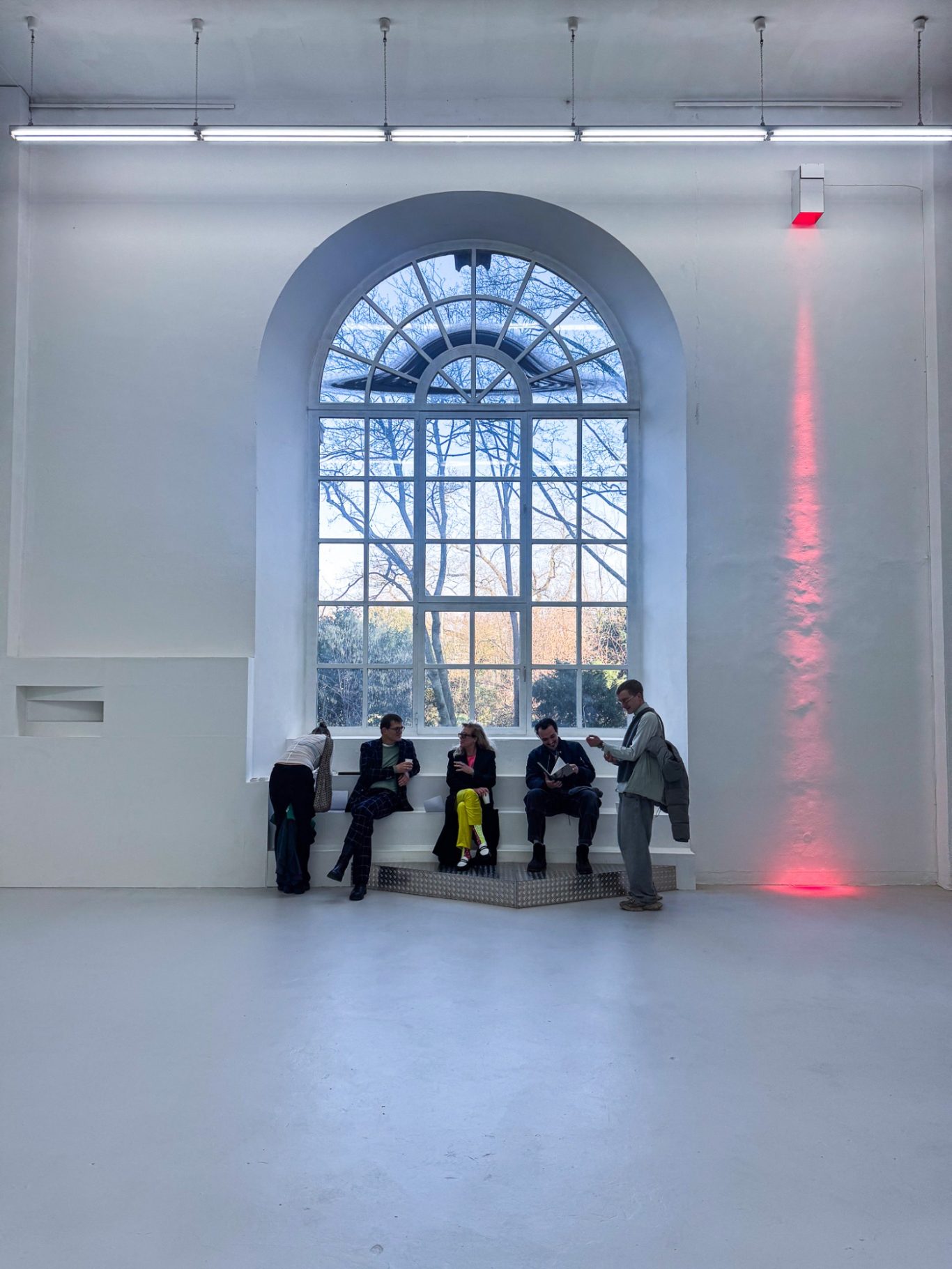
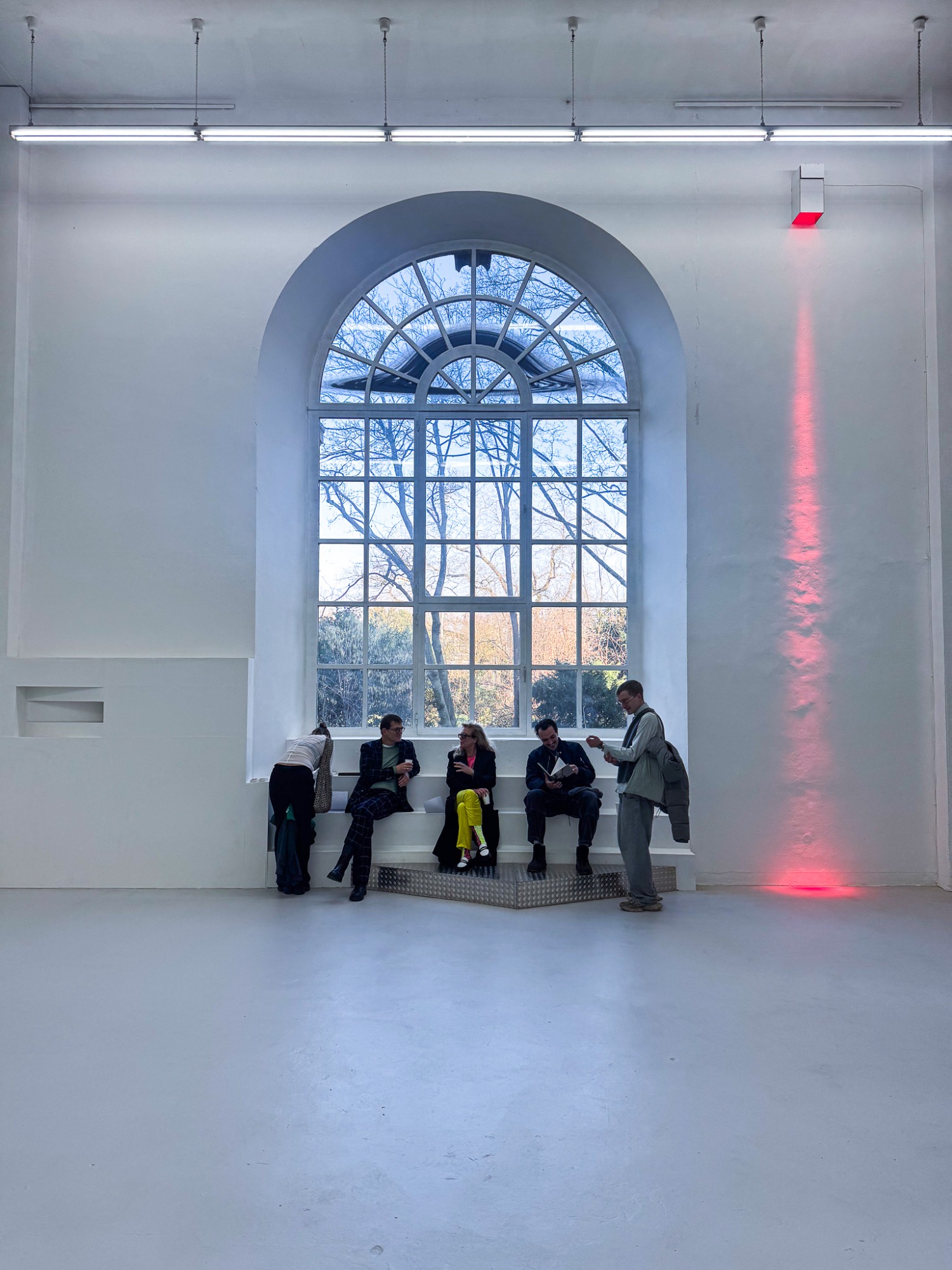
“Having nothing at all” is the primitive state of human dwellings and also reflects humanity’s future demands for architecture. The similarity between primitive and futuristic spaces lies in their stripping away of superficiality to reach the essence of things—to provide shelter, provoke thought, and evoke emotional resonance. Space exploration design is a quintessential example of this intersection. For instance, the Mars habitat designed by NASA and the architecture firm BIG is not only minimalistic but also entirely functional, resembling the caves that early humans once depended on. This minimalist aesthetic and functionality represent not only the starting point of human design but also its possible endpoint, symbolizing cycles and belonging. Cycles and belonging reflect humanity’s need for fundamental laws and the integration of art with space, making them one.Whether the Kunstakademie Düsseldorf building is a mountain or a spaceship, this room serves as a matching cave or chamber. Its form directly serves its purpose: the paintings, sculptures, sounds, and interplay of light and shadow. Together, they form a cohesive whole. The space is simplified because of them, and they, in turn, become clear and legible due to the building andits space.
01 | UNFORGIVEN
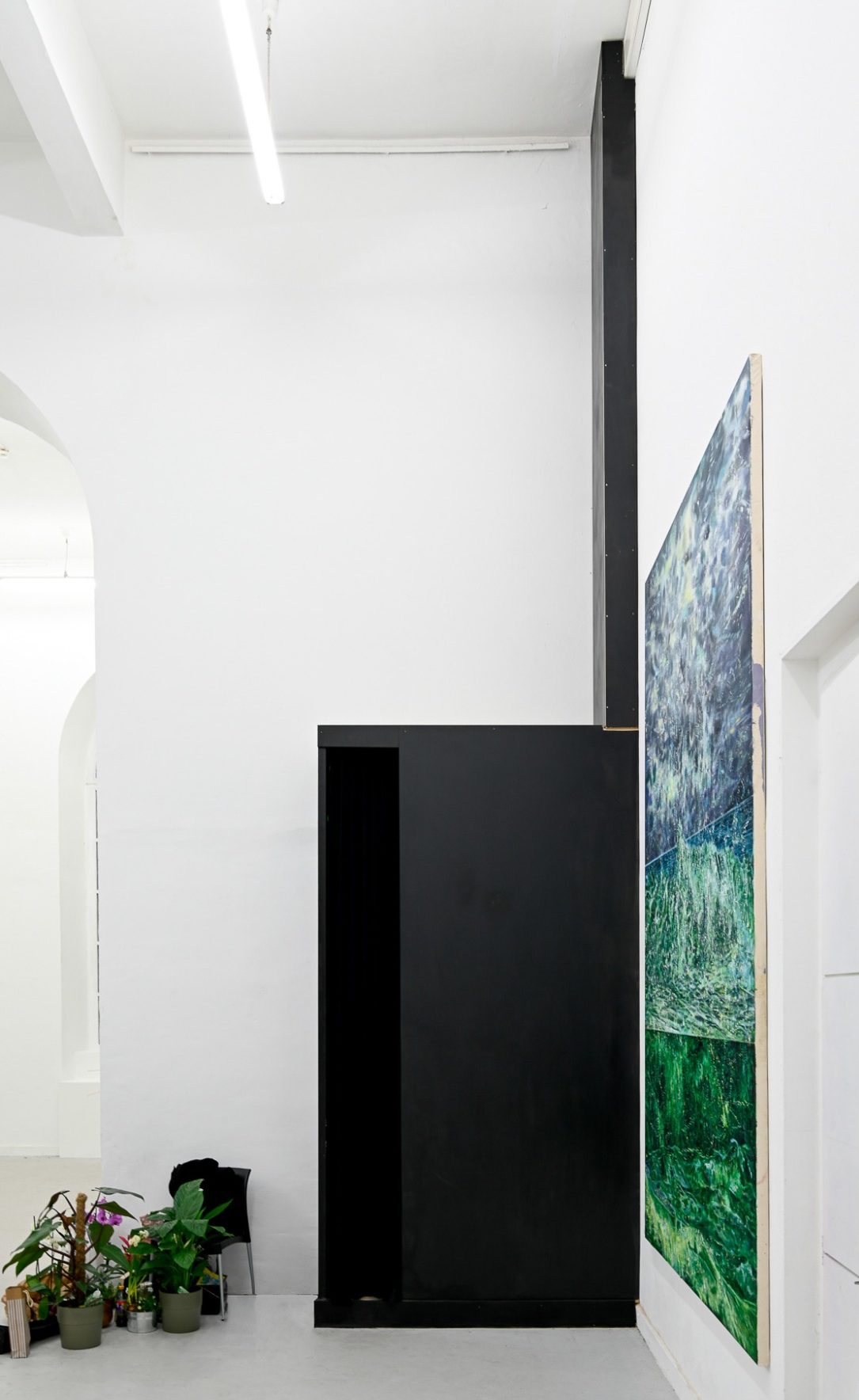
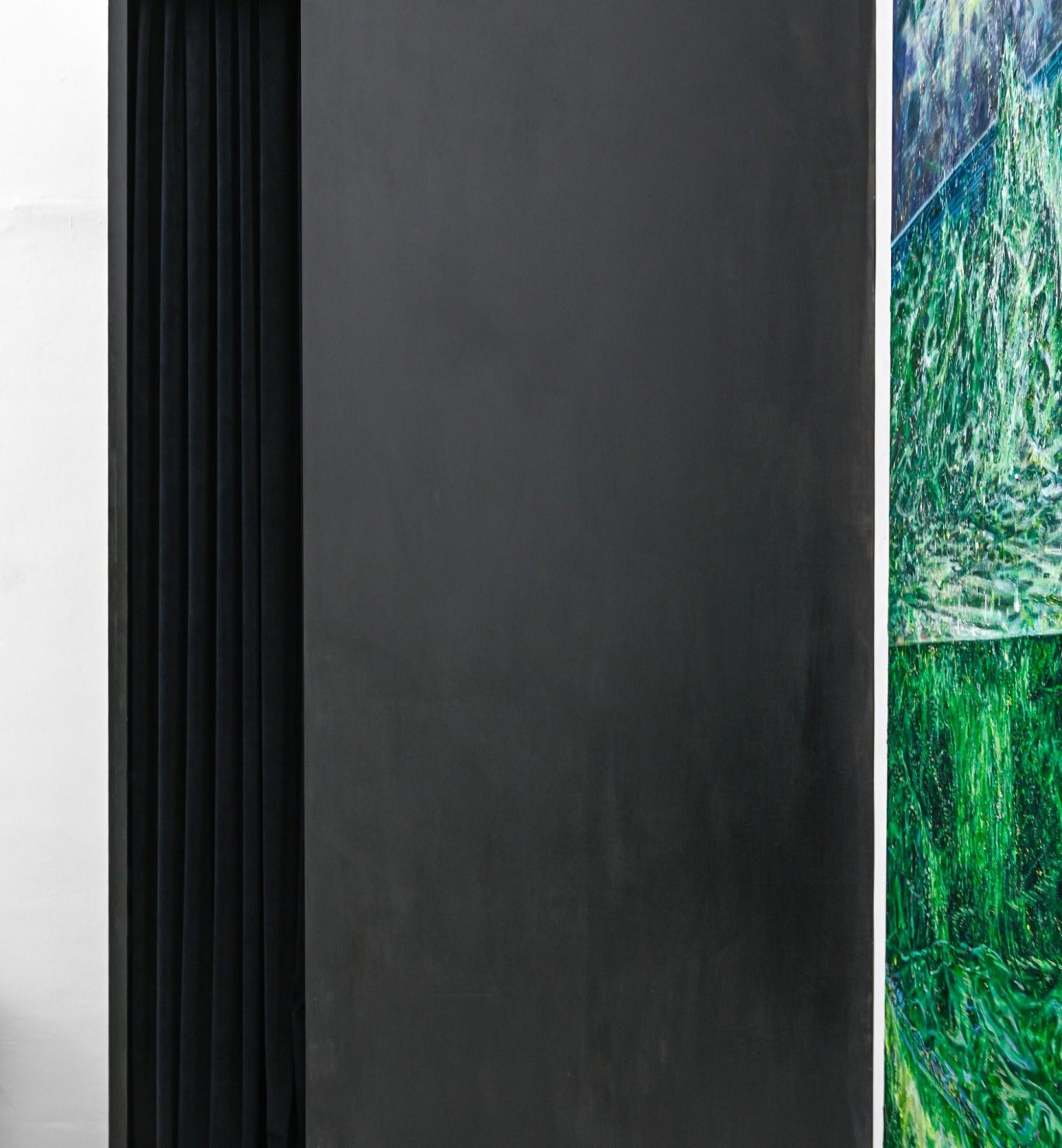
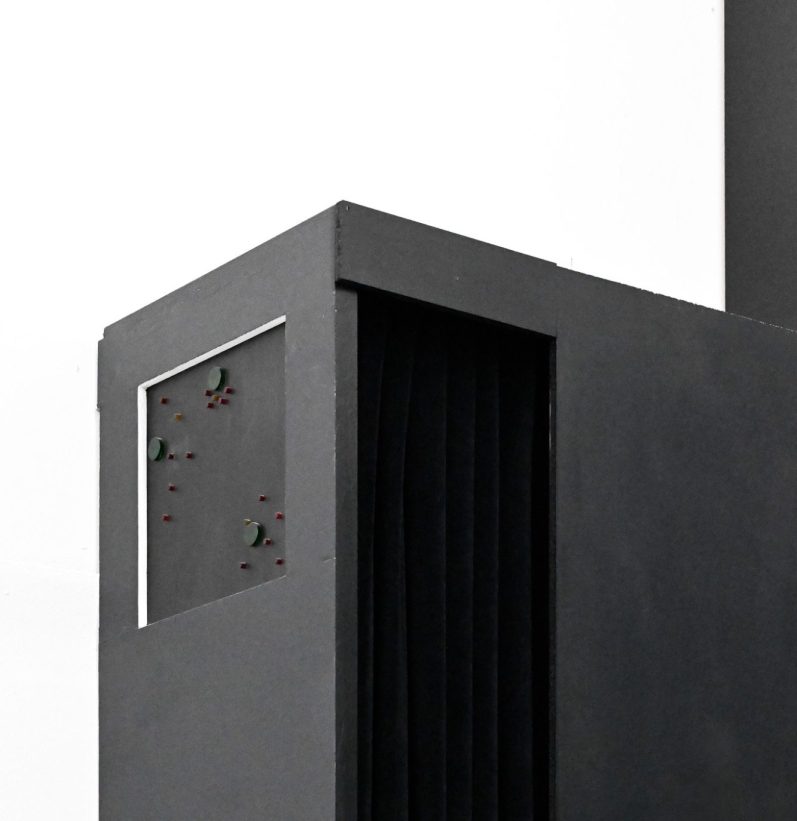
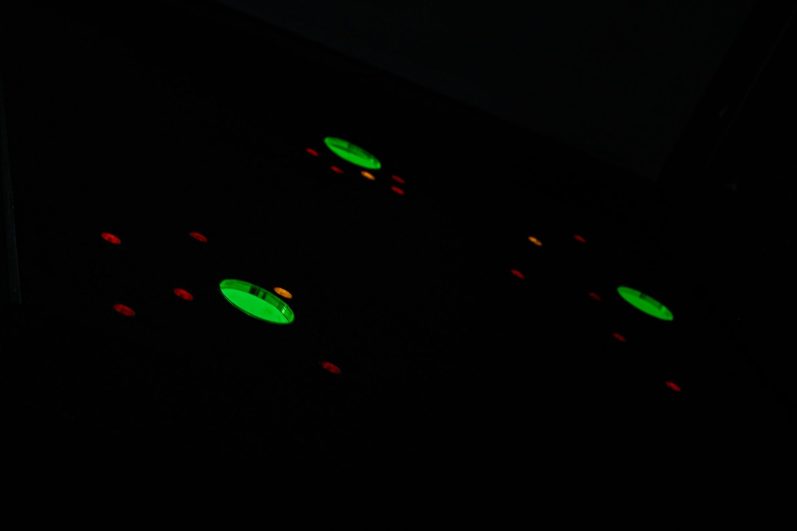
UNFORGIVEN, 2024-25, Wood panel, organic stained glass, sound installation, black velvet, (internal structure: sink, pipes), 720 × 187 × 73 cm
This is a work based on the original structure of the space, connected to the architectural framework. The idea stems from my own studio, where I intentionally constructed a similar space to escape the intrusive thoughts that arise while working. Its form references the confessional in Christian churches—a building within a building. Since my studio is located in a former monastery, I think I have been influenced by this religious architecture to some extent, viewing this small space as a confessional. In art, the concepts of right and wrong are dynamic. Like many artists, I often struggle with the lack of clear standards, so I see this space as a place where I can forgive myself.
The upper part of the structure features stained glass, depicting the Summer Triangle constellation. The colors are differentiated according to the primary and secondary stars, and light passes through the glass to form abstract patterns in the dark interior—a meditative abstraction of the summer night sky, which helps me relax. Behind the internal partition, a sound piece I collaborated on with a music producer plays continuously. It consists of sounds like deflating tires and flowing water, symbolizing the accumulation and release of emotions. This sound follows a pipe integrated into the larger building, one vast enough to bear the self-reproach that arises in art. It also represents the things you can feel but cannot see.
02 | SKYFISH( RODS )
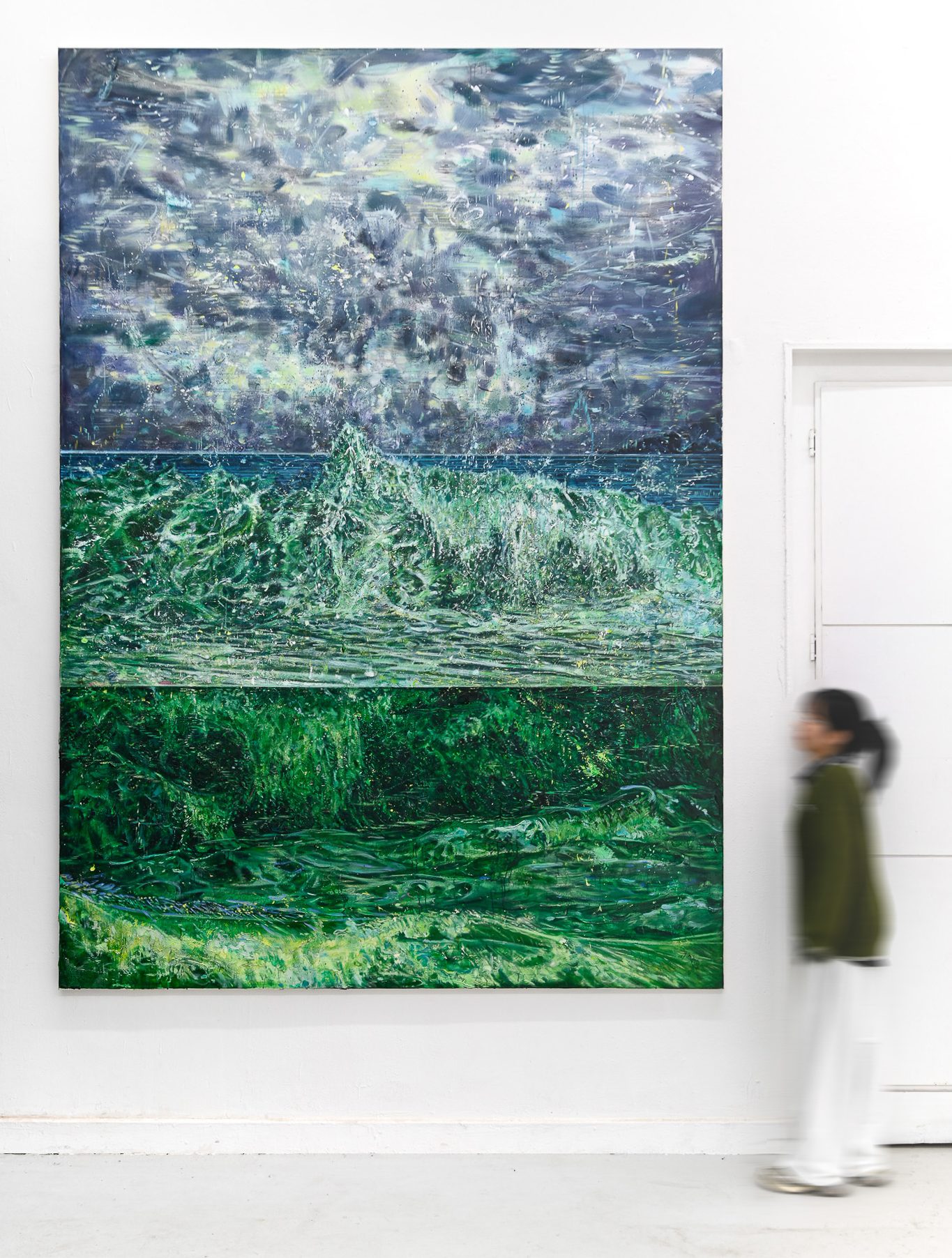
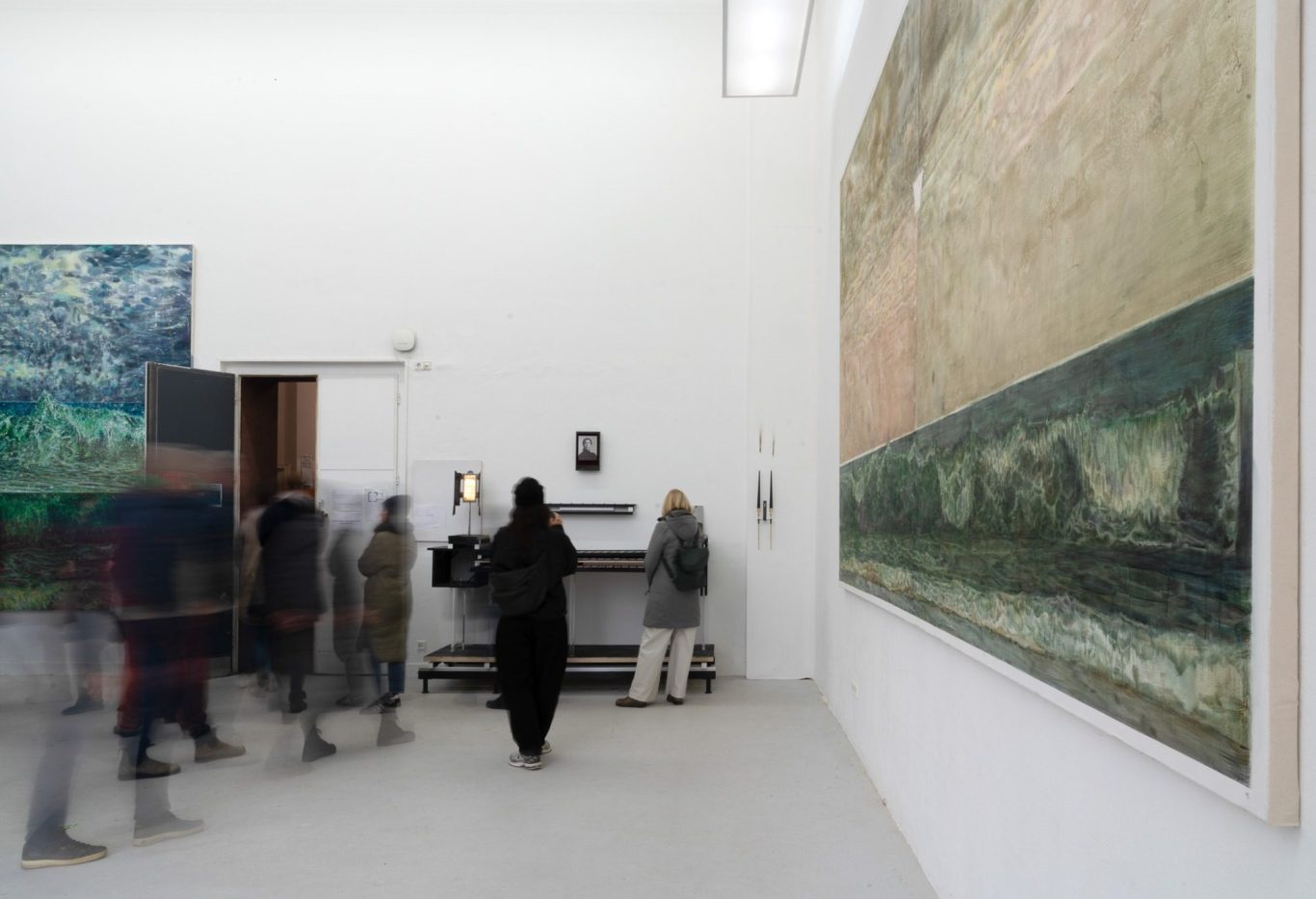
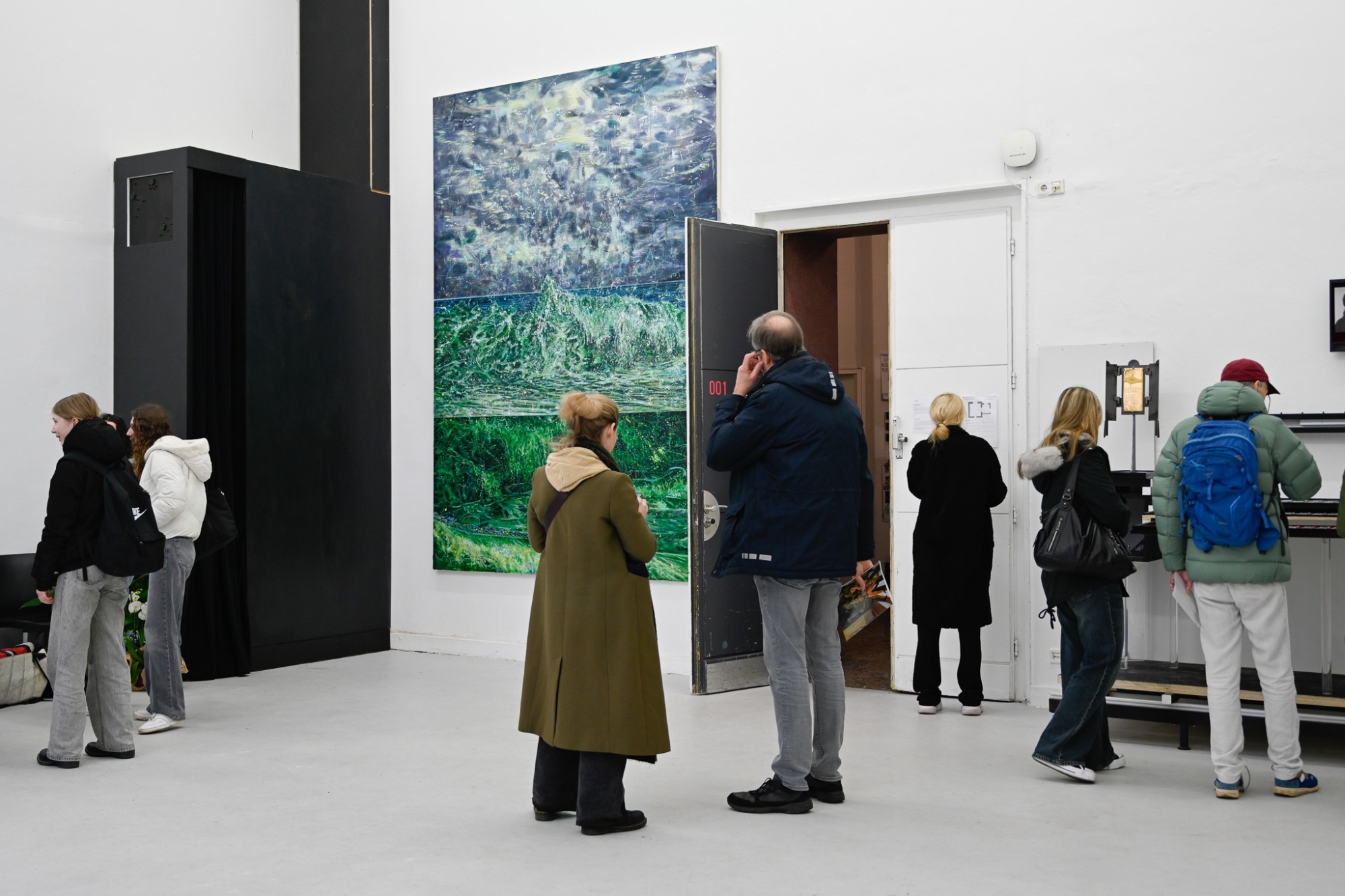
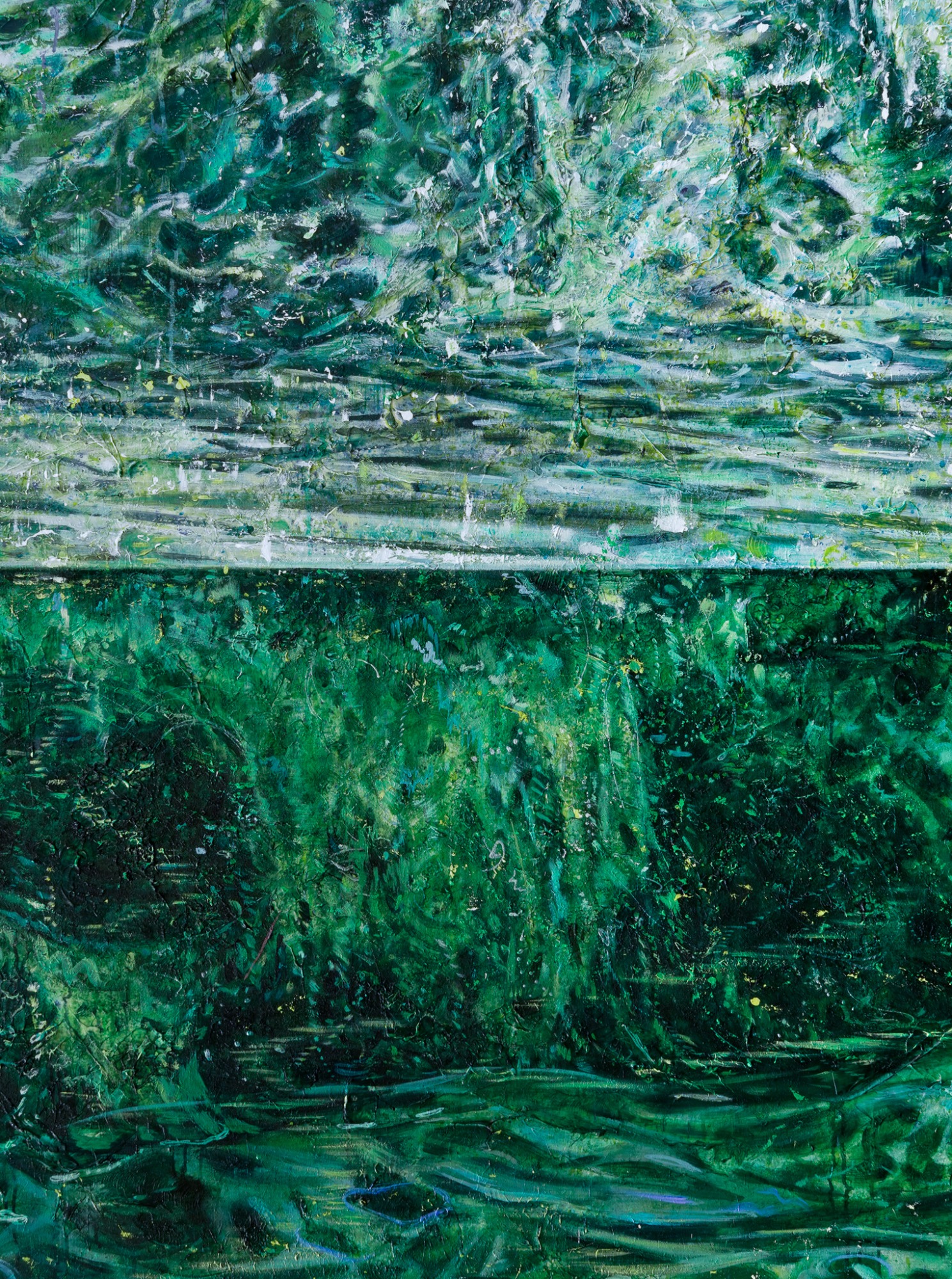
SKYFISH ( RODS ), 2024, Oil and acrylic on canvas, 350 × 240 cm
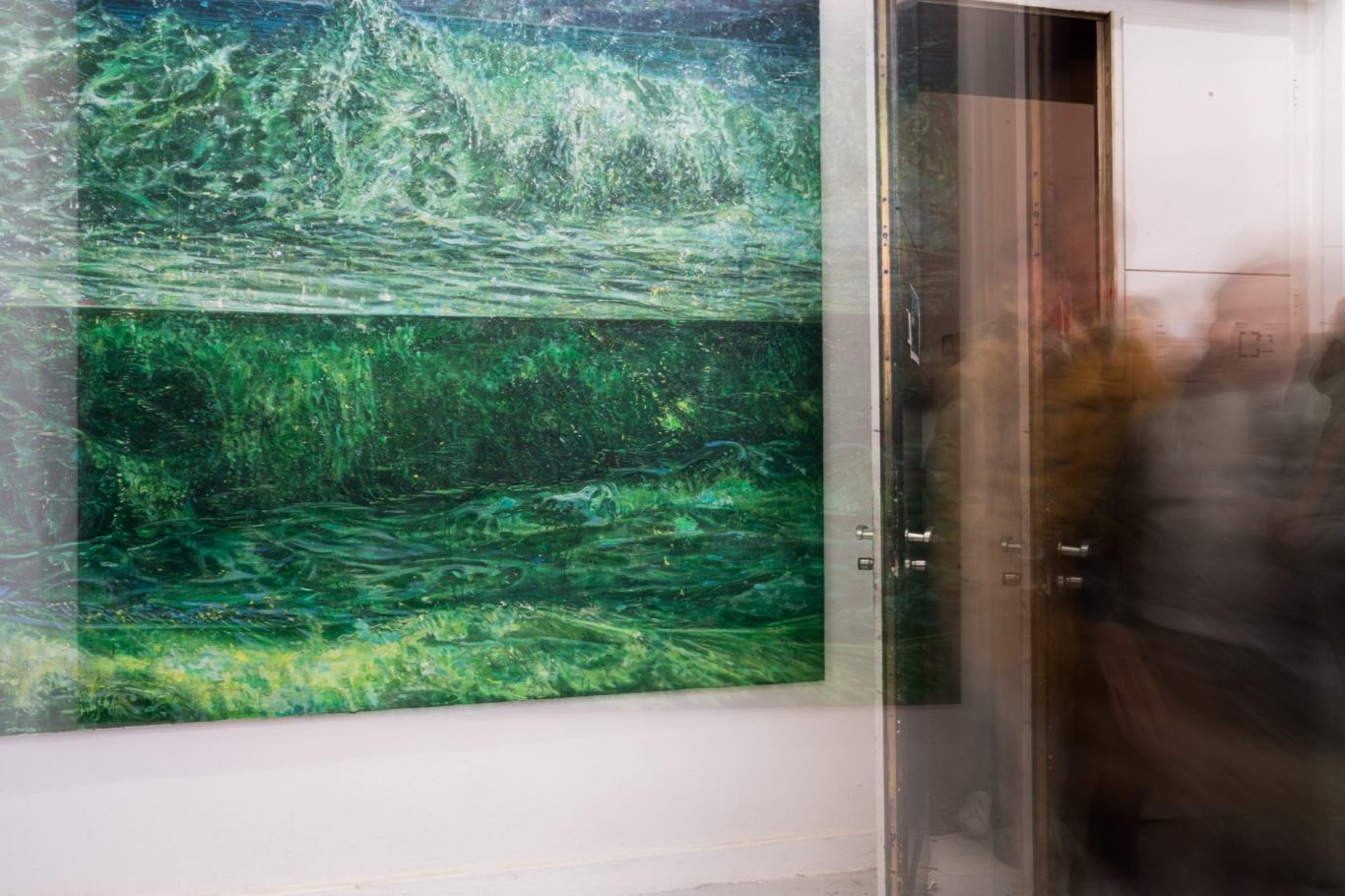
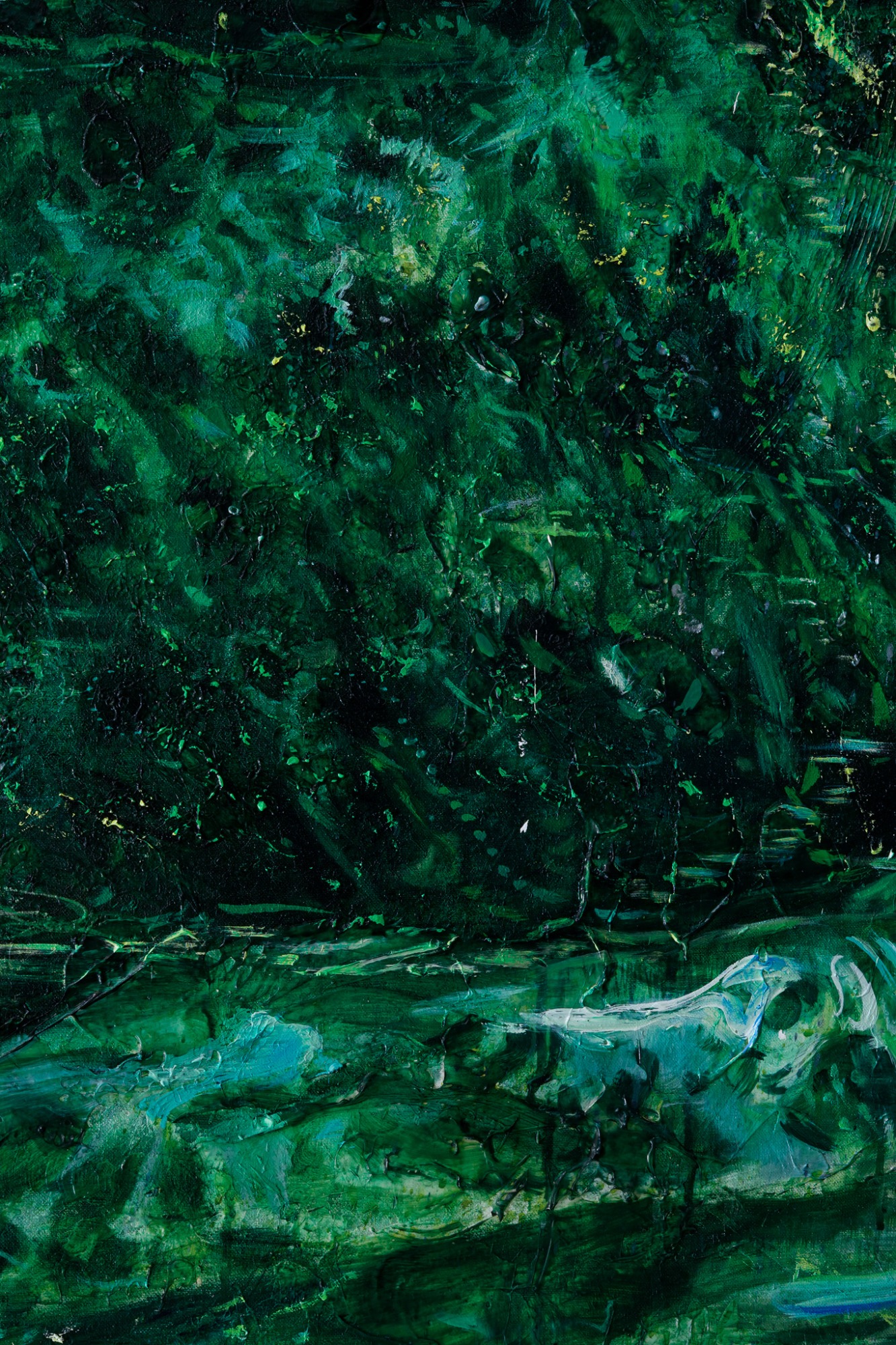
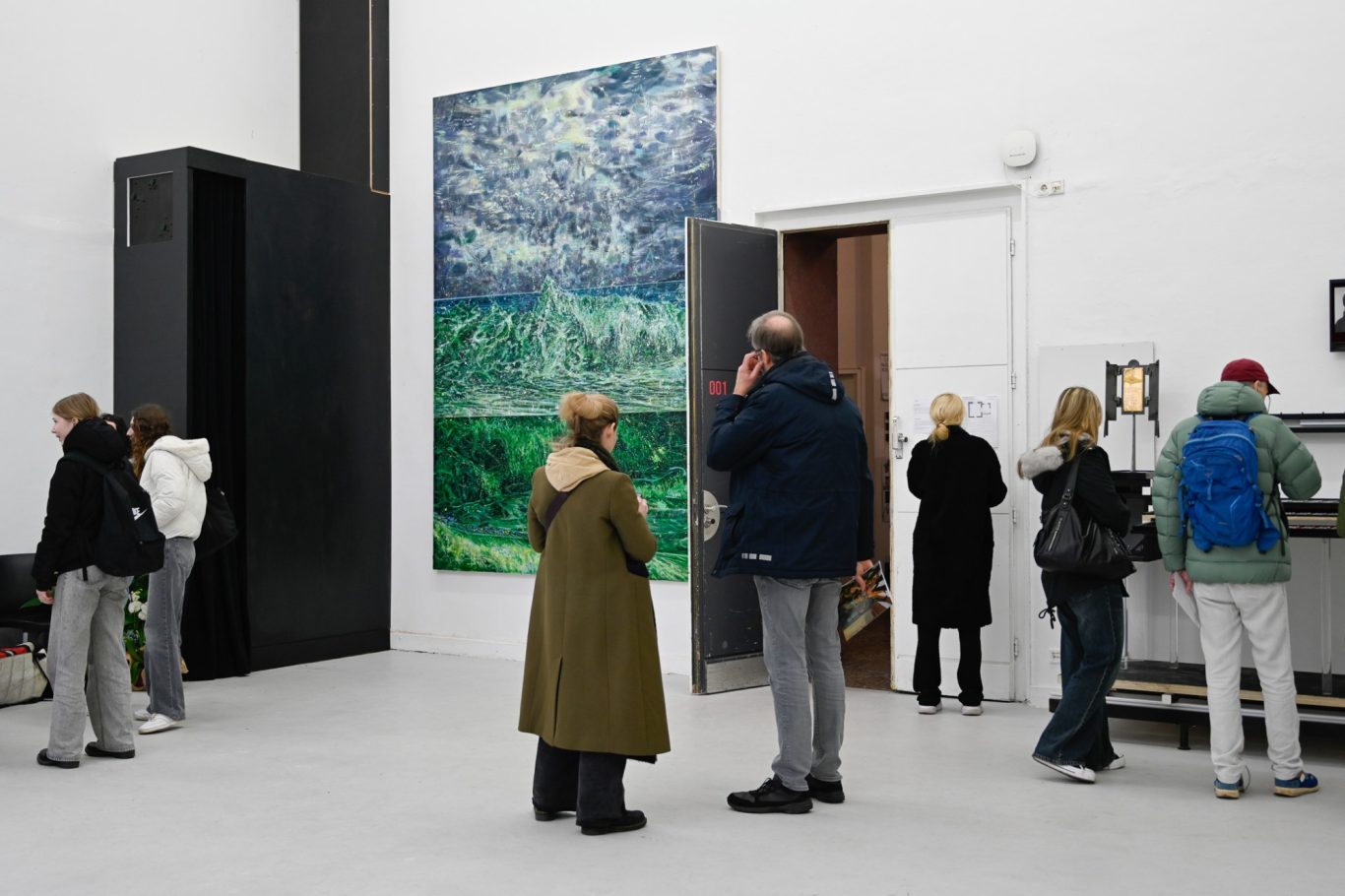
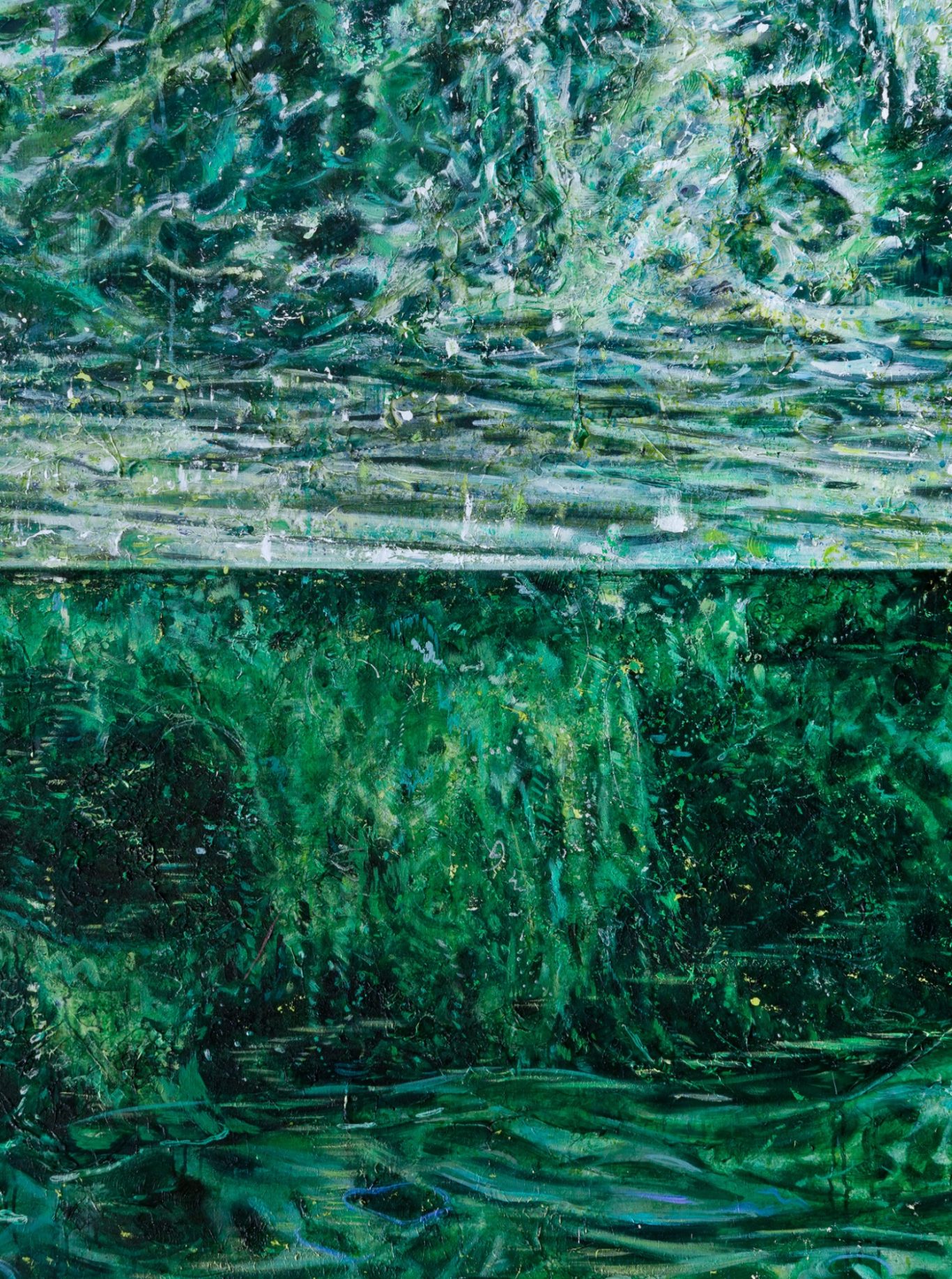
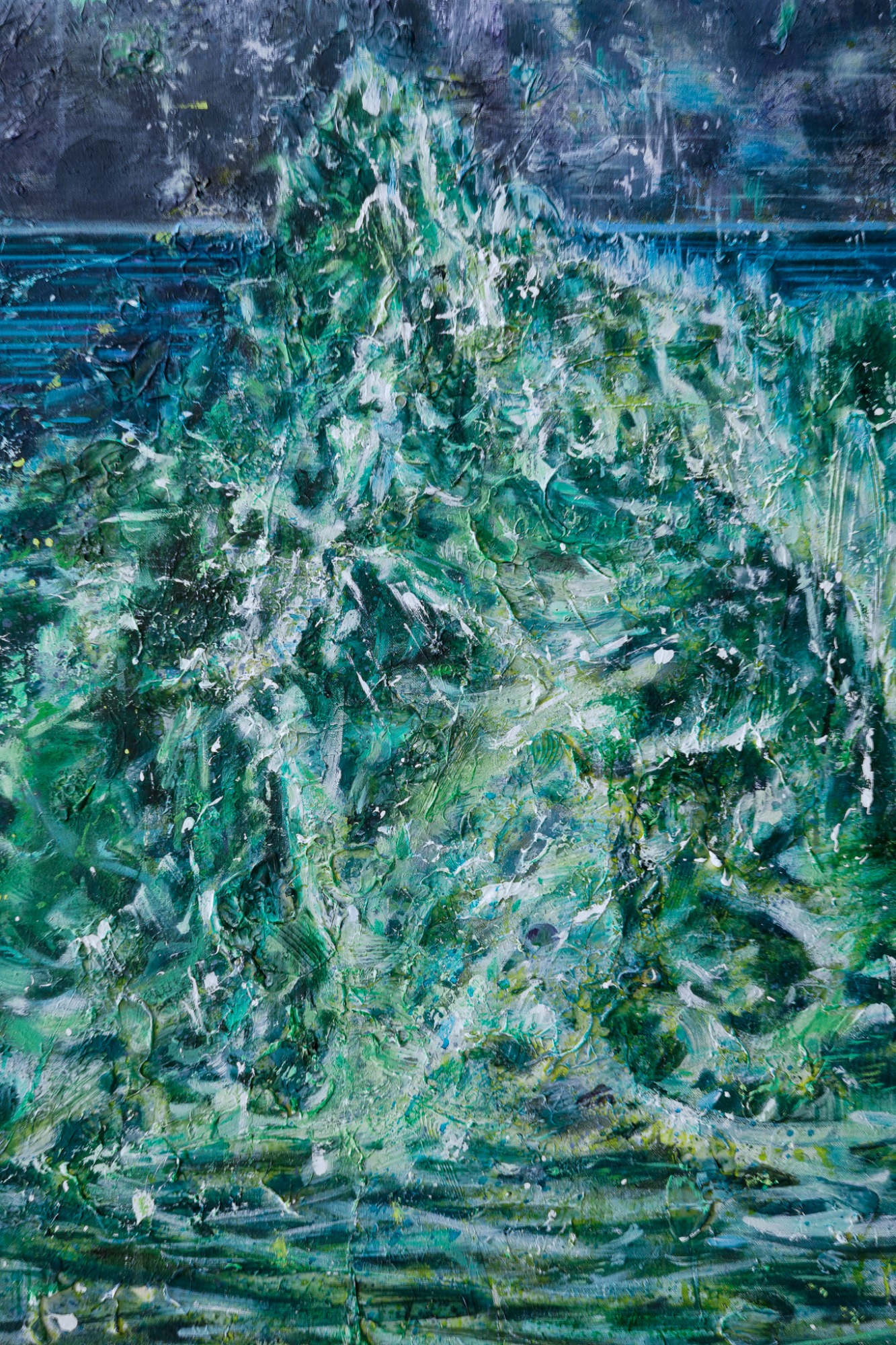
Underwater, on the water's surface, and in the sky, these three states reflect my understanding of the laws governing this planet —or rather, modern humanity's needs for the world. It is not realism, nor is it science. I find it strange that I can only articulate what it is not, without being able to provide an answer. I know it is something humanity needs. It resembles us—humans. In painting, it is liquid imitating liquid, a mirror of media blending and colliding under the influence of gravity.I suspect these laws will be missed even if humanity migrates to Mars. As long as humans remain within their physical shells, they will yearn for the comforting "laws," for the sense of security brought by unchanging principles.
03 | IDOL
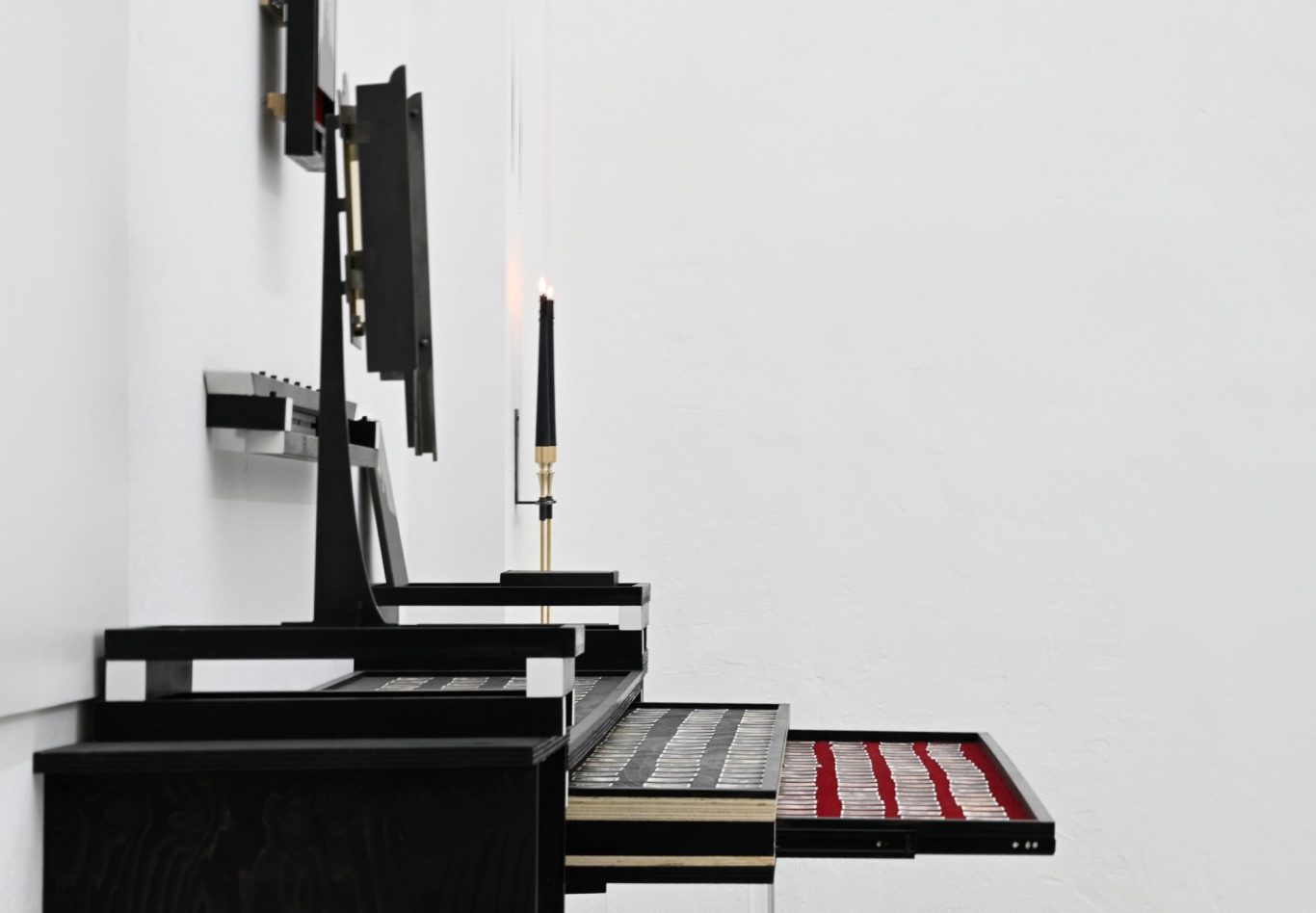
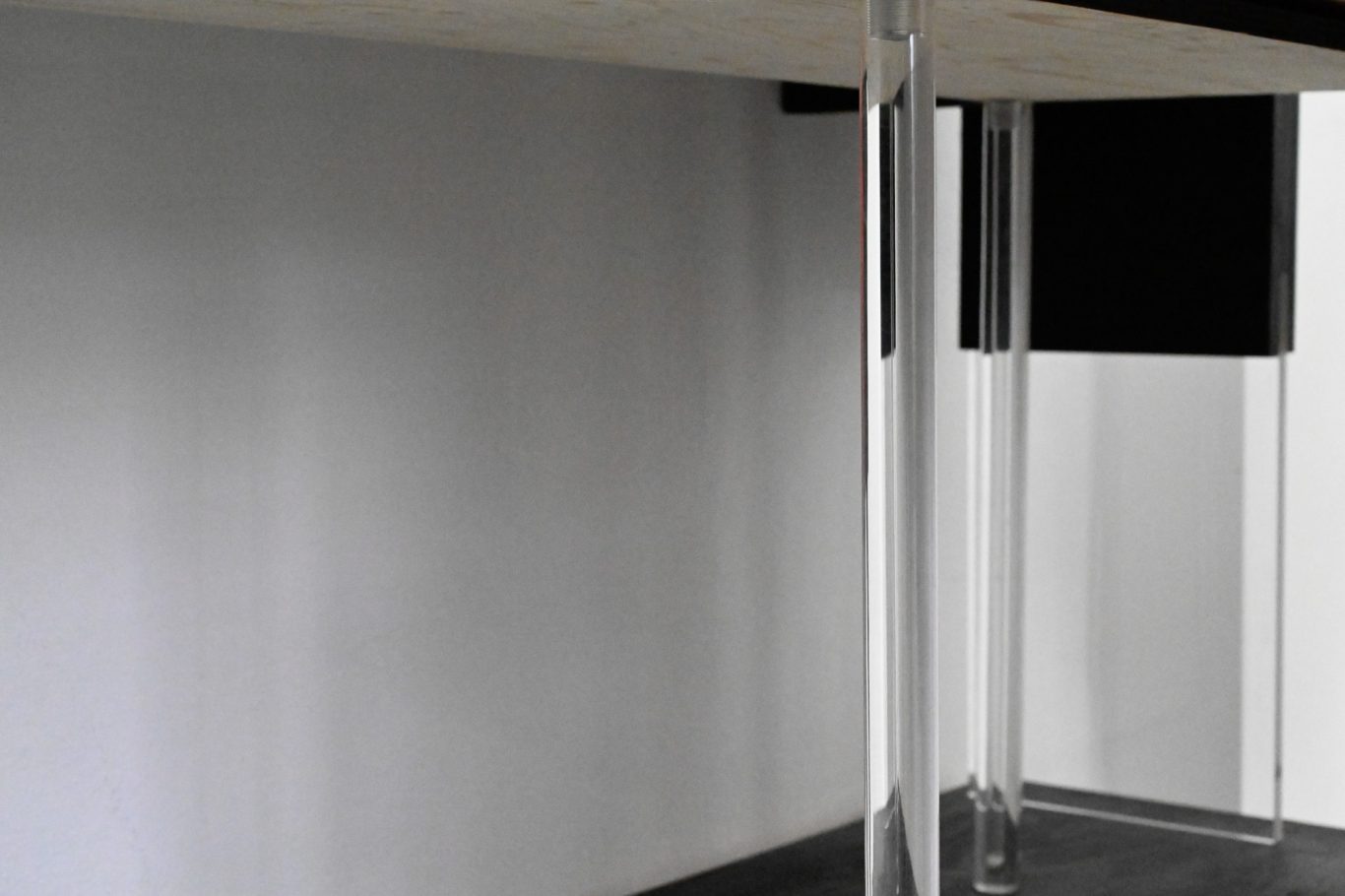
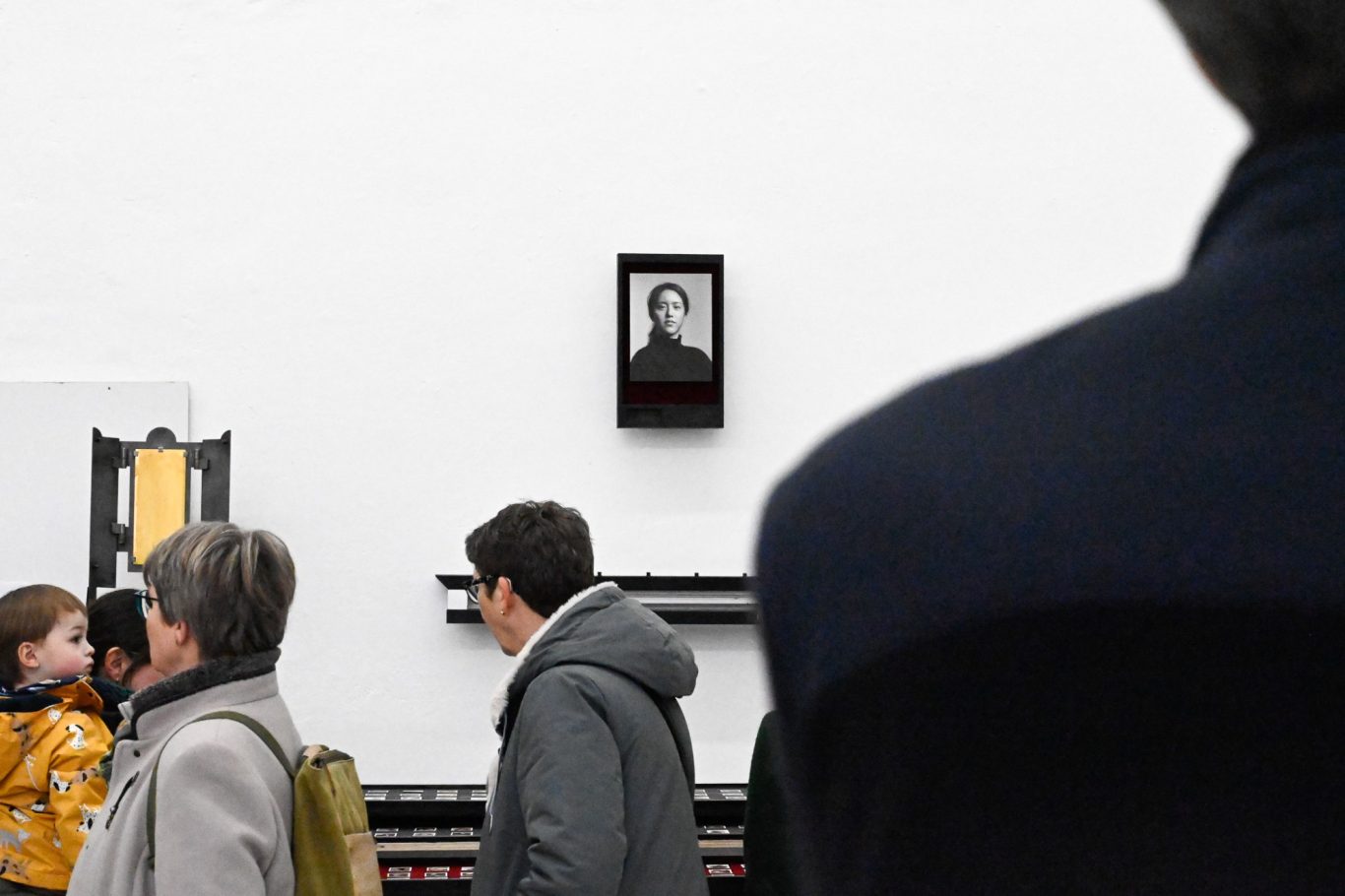
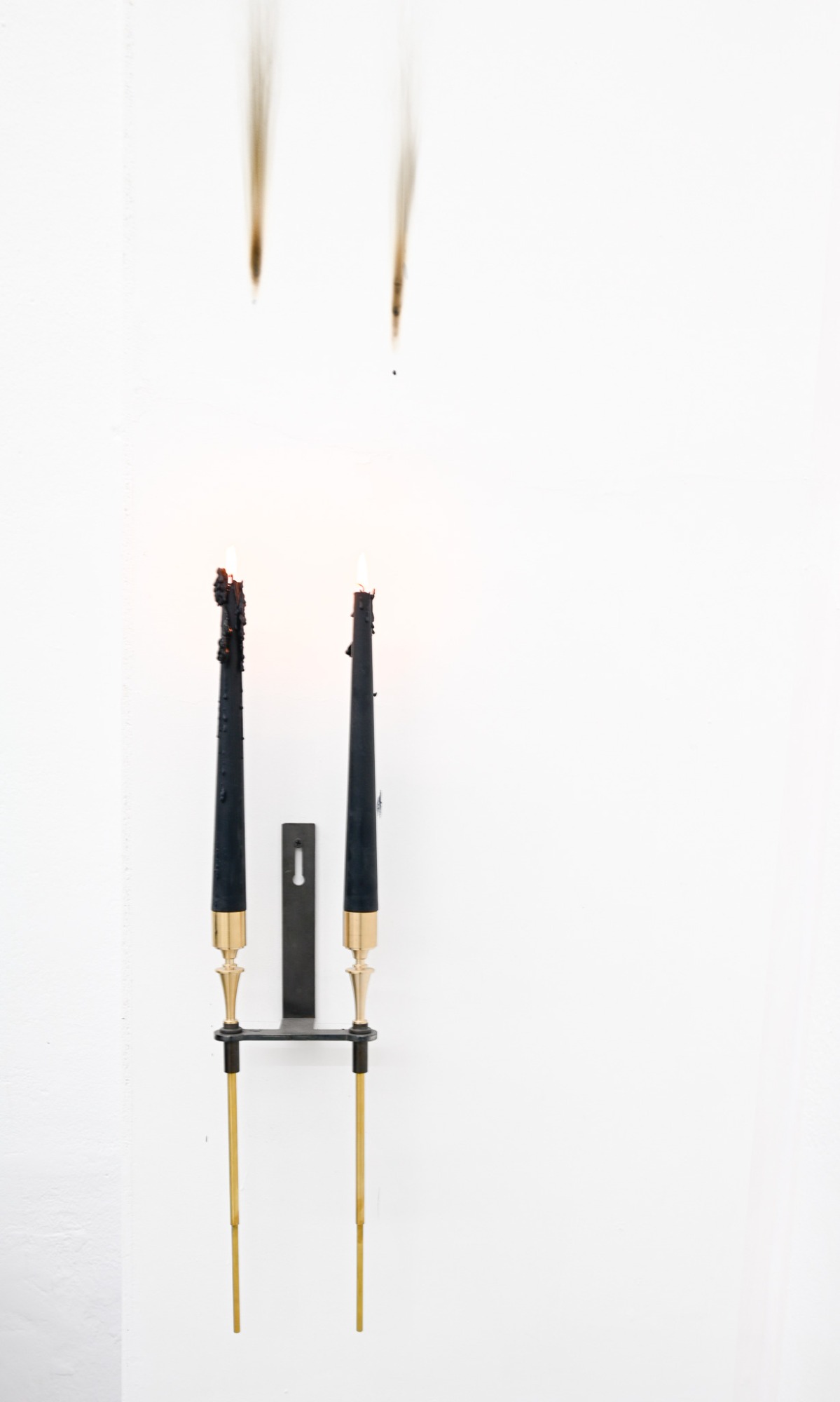
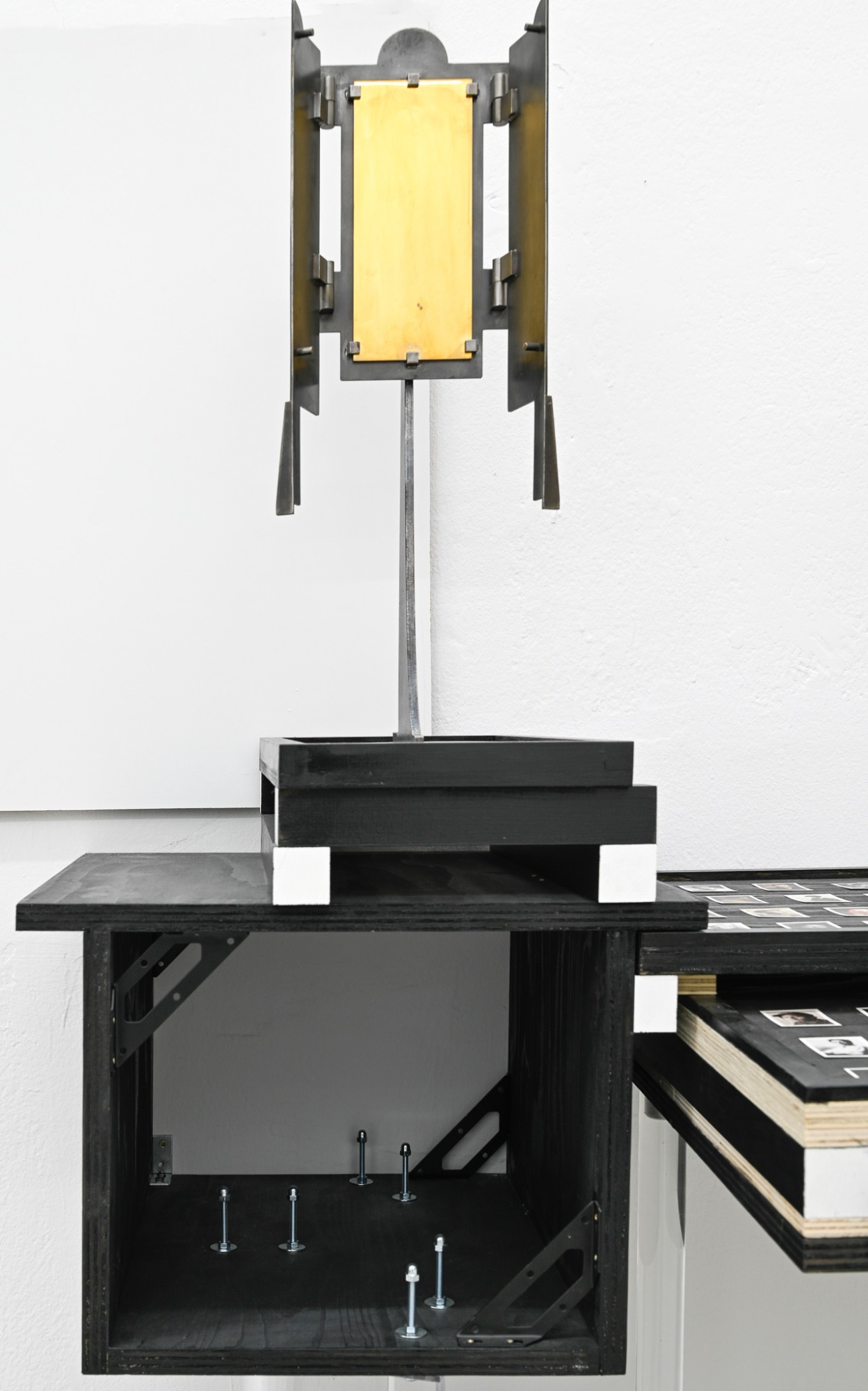
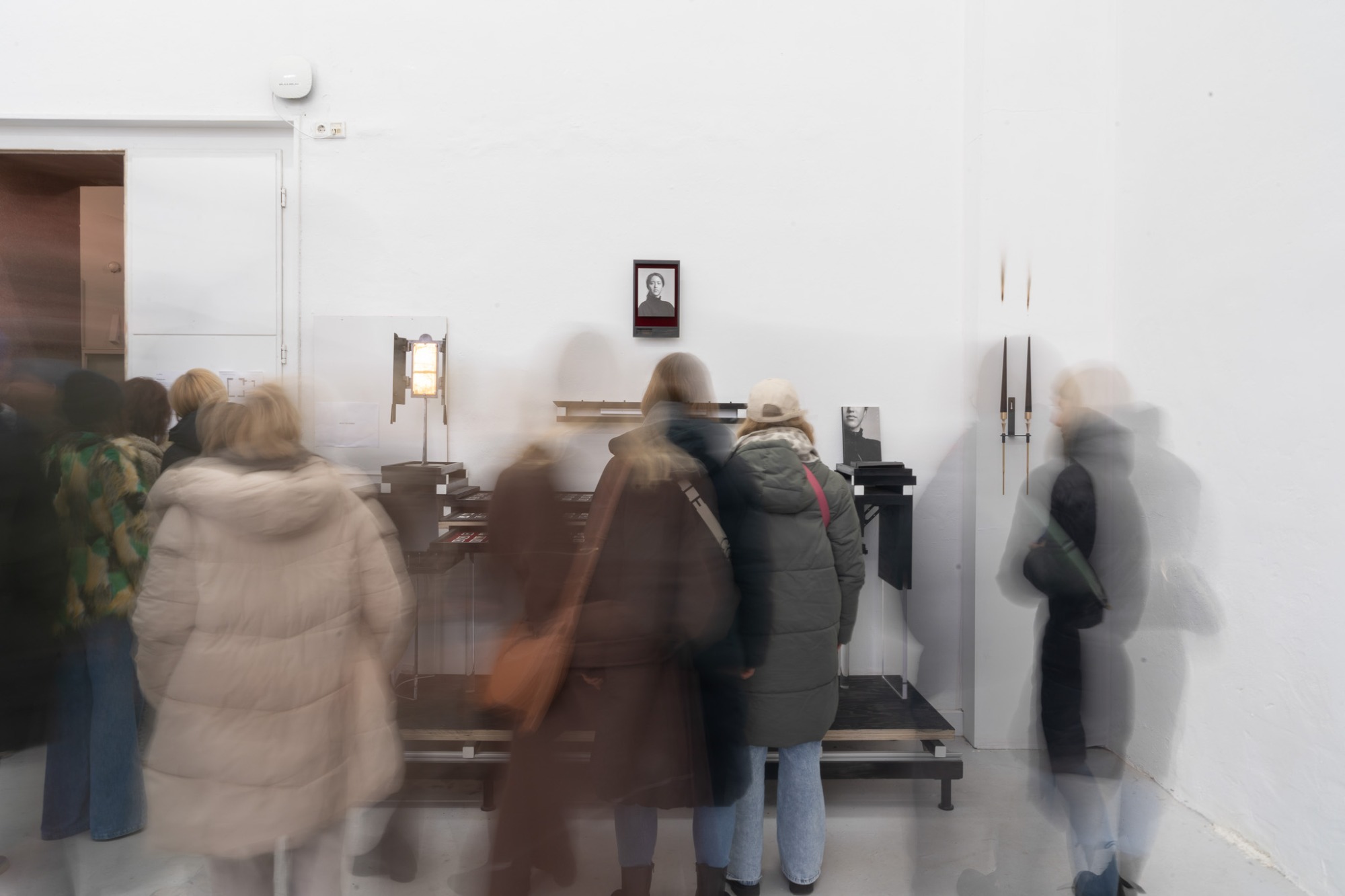
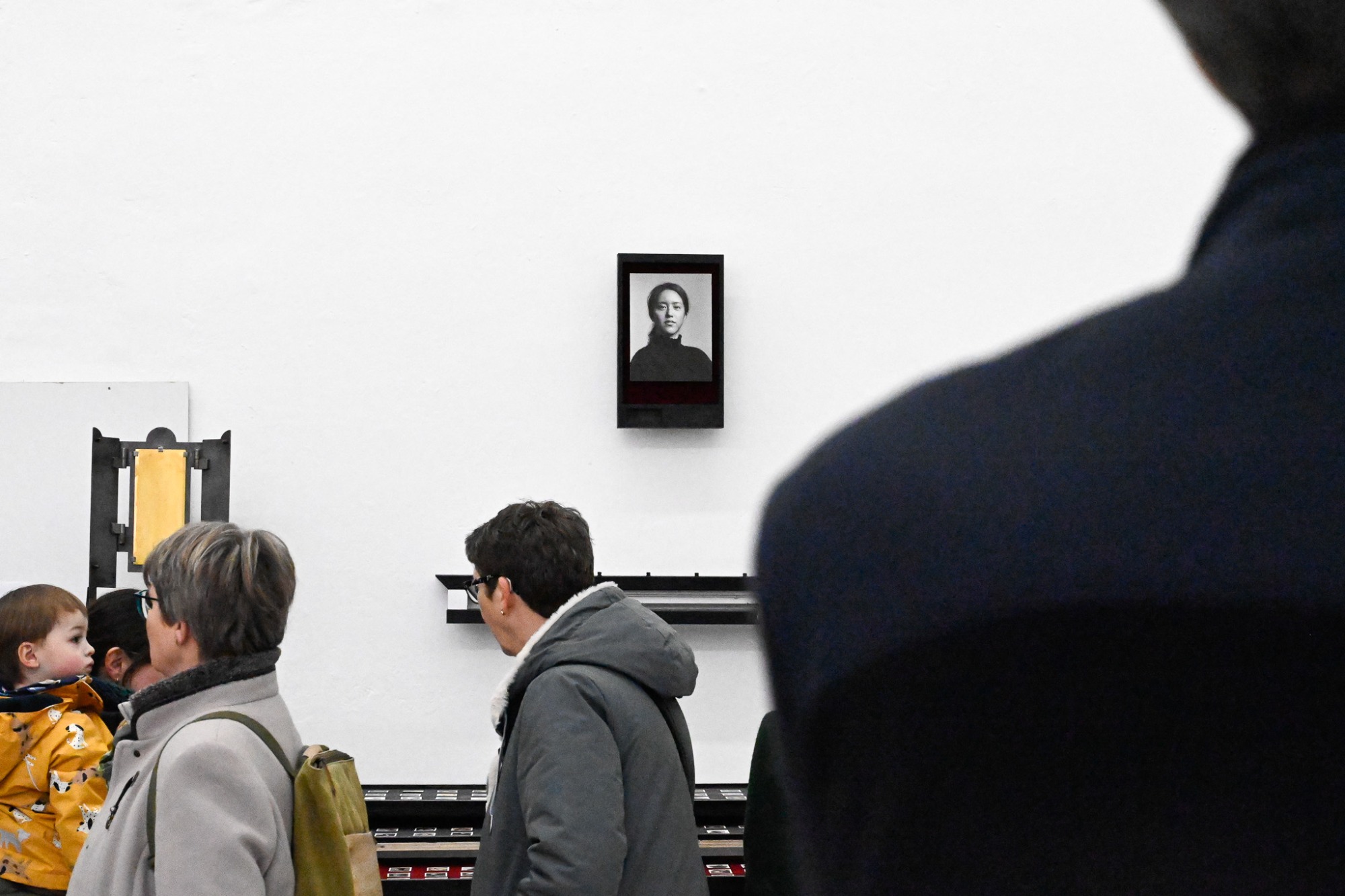
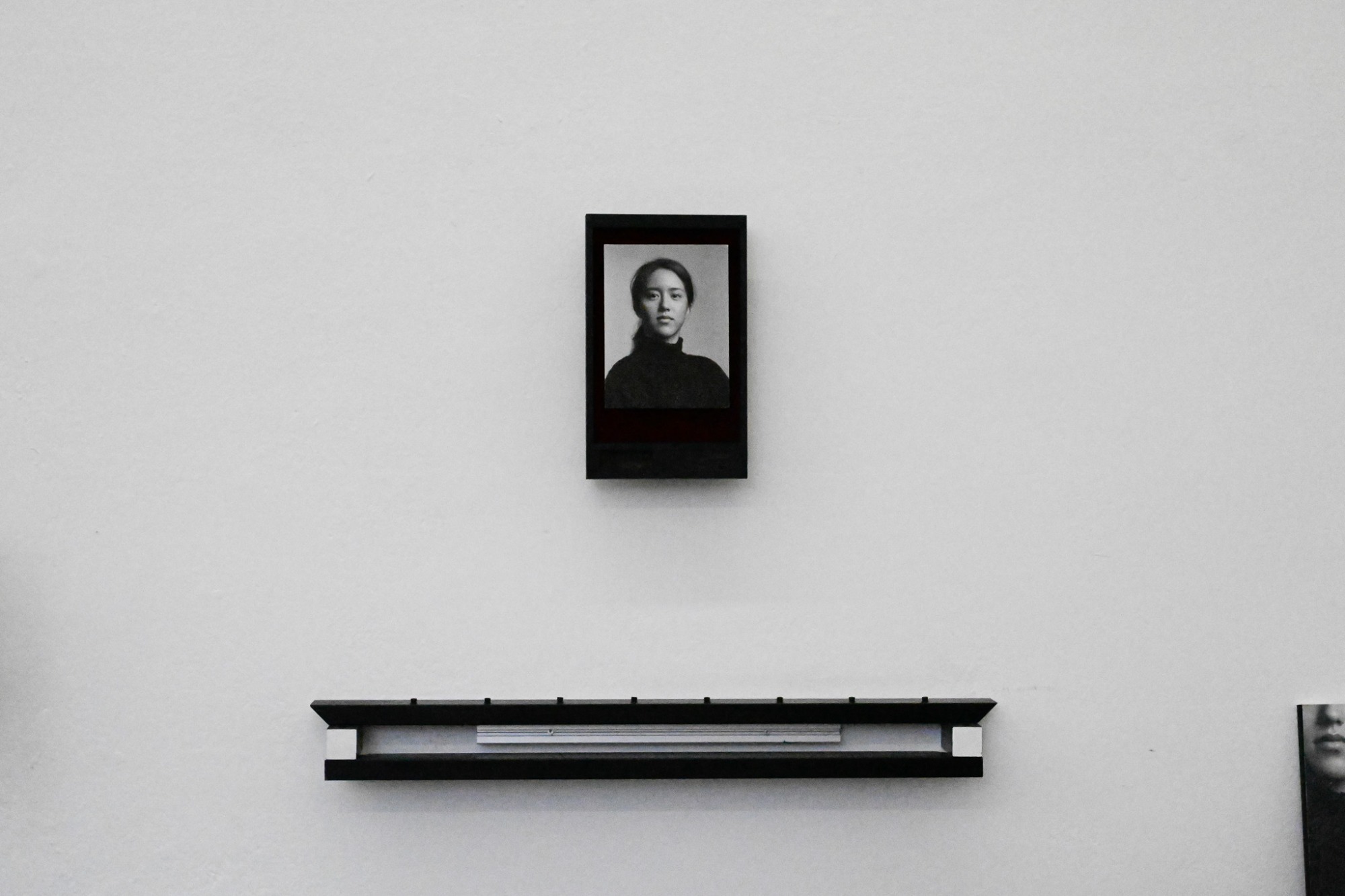
IDOL, 2024-25, Wood panel, organic acrylic, digital inkjet print, red velvet, steel, candle, copper,Variable dimensions
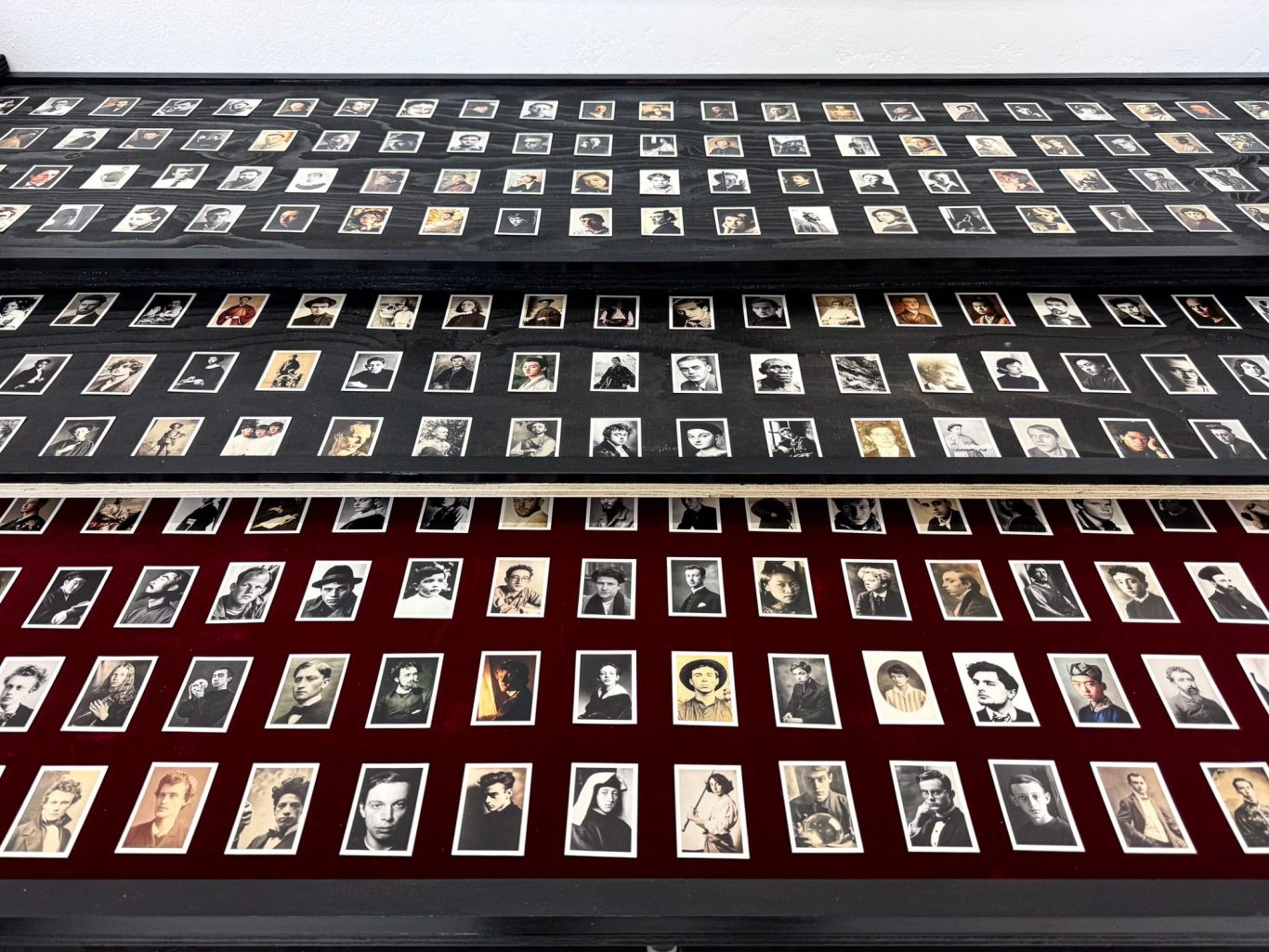
It includes 300 youth portraits of historical artists (from the primitive period to the 19th century) that I have selected and combined with my own photograph into a single image. The database featuresauthentic portrait photography as well as AI-generated pre-photography-era artist portraits (e.g., an 18- year-old Raphael). This work reflects on the relationship between artists and their idols as it evolves over time, addressing the question: what does our reverence in art grow into?
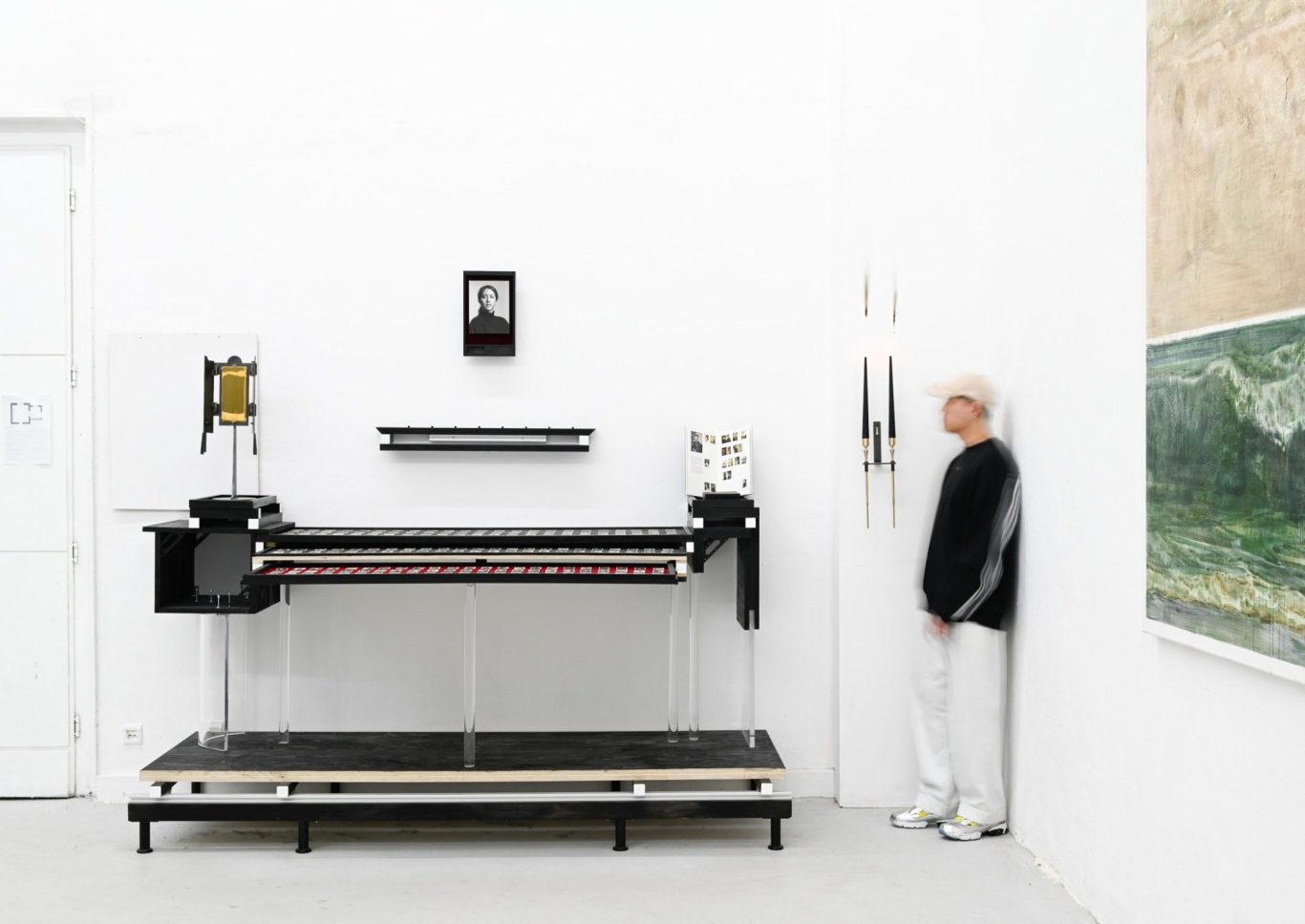
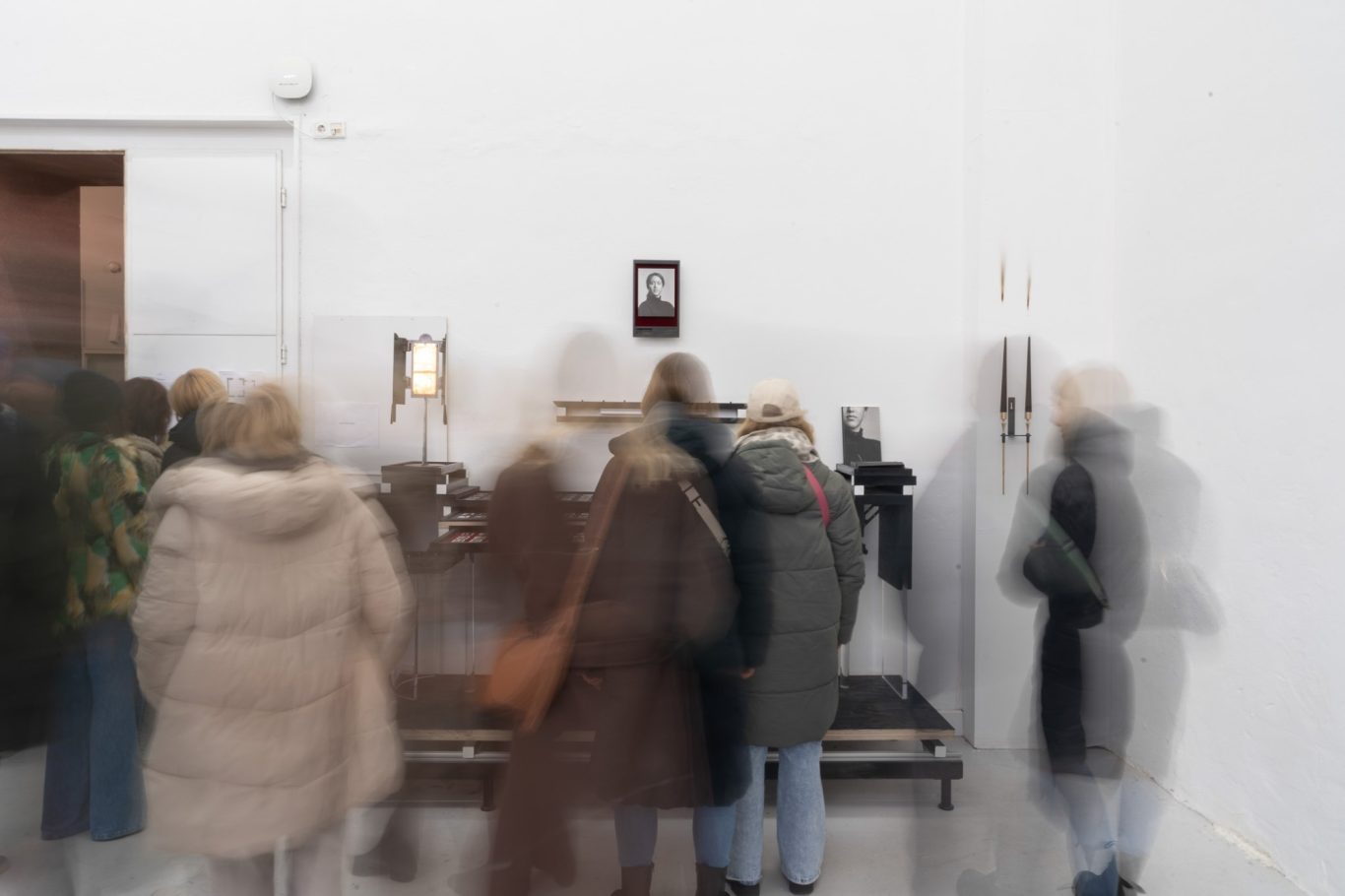
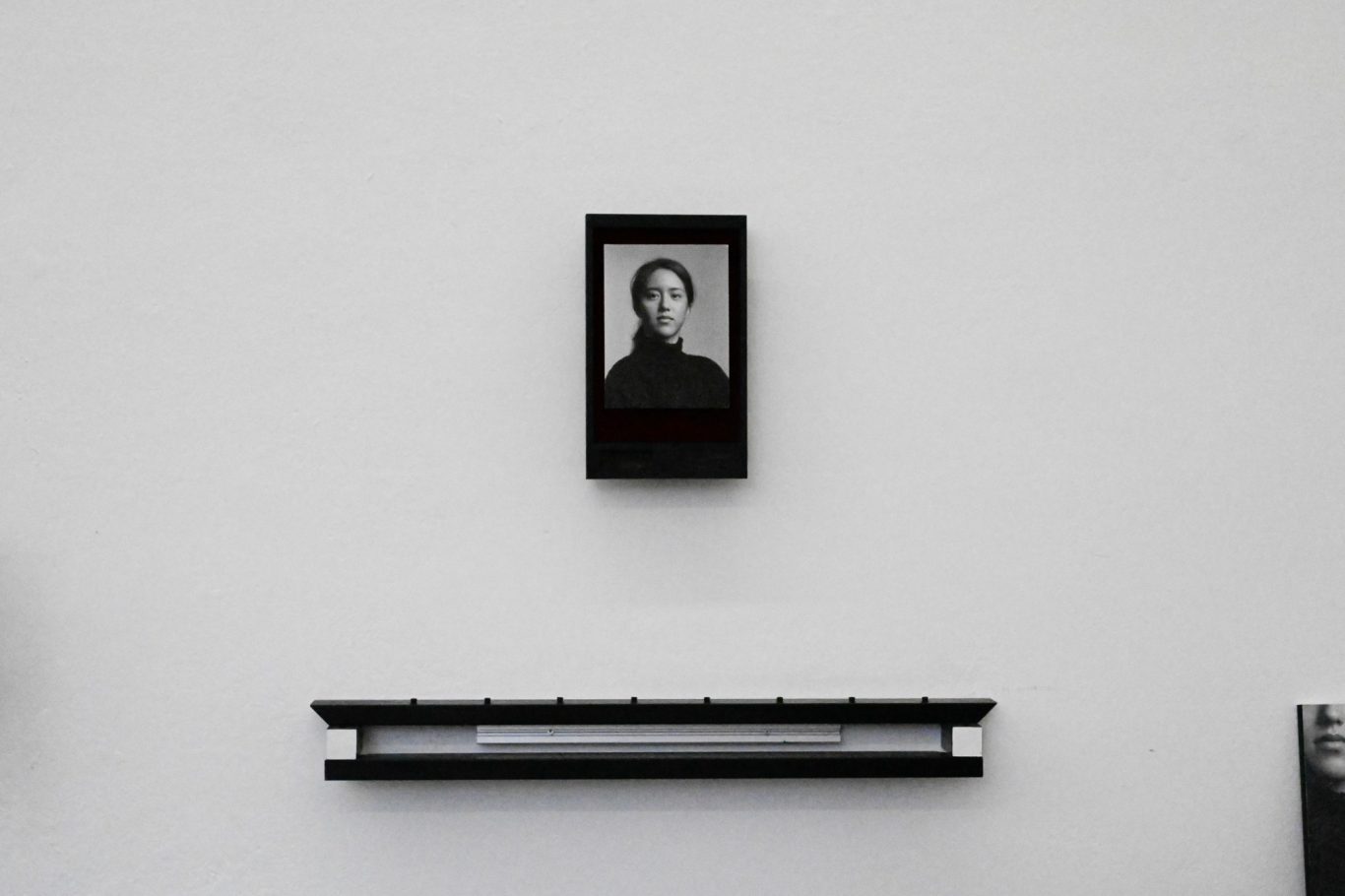
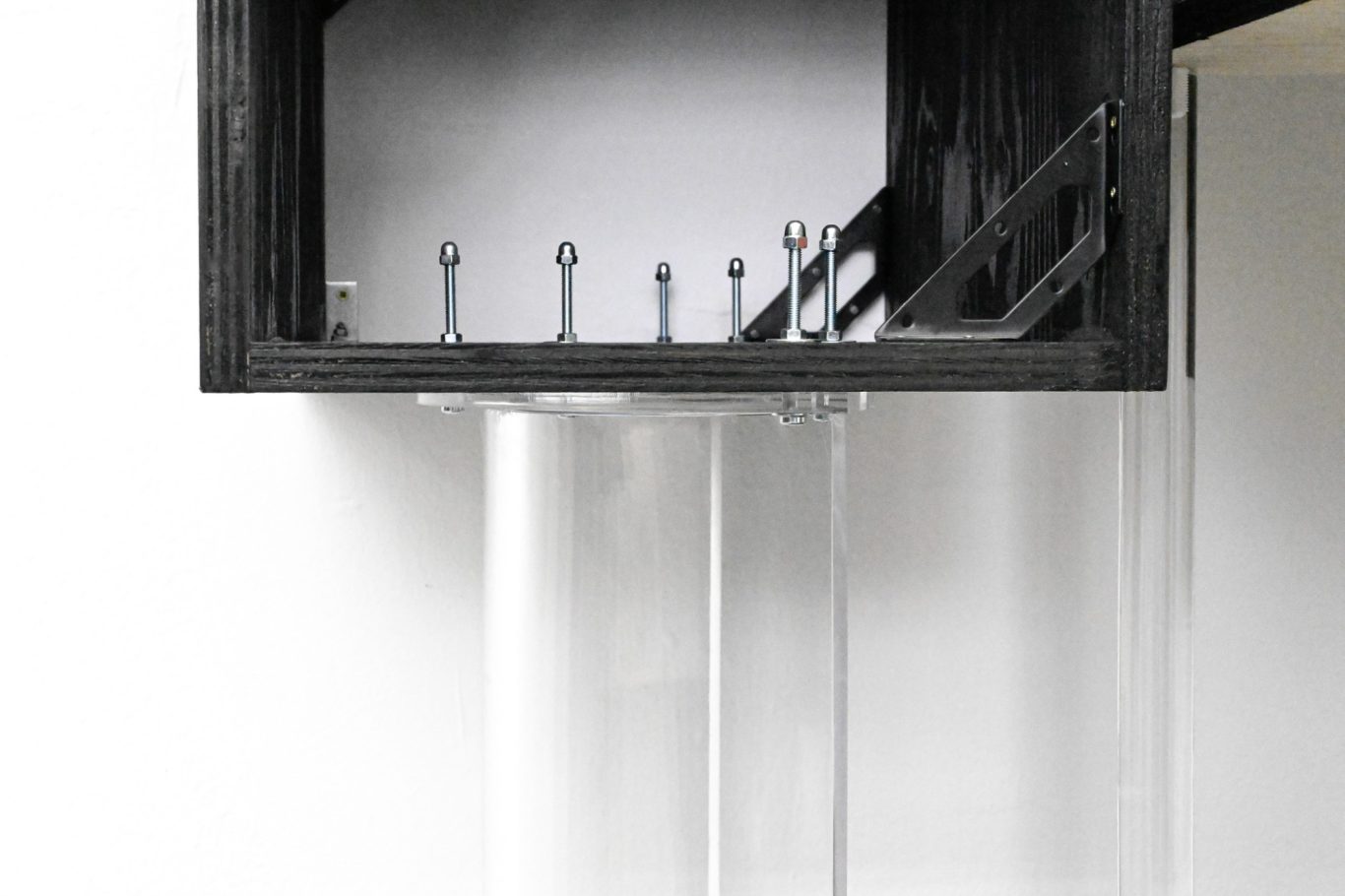
Sacred icons and relics are essentially the same. Every artist is a book of art history.
04 | MUTIVATION
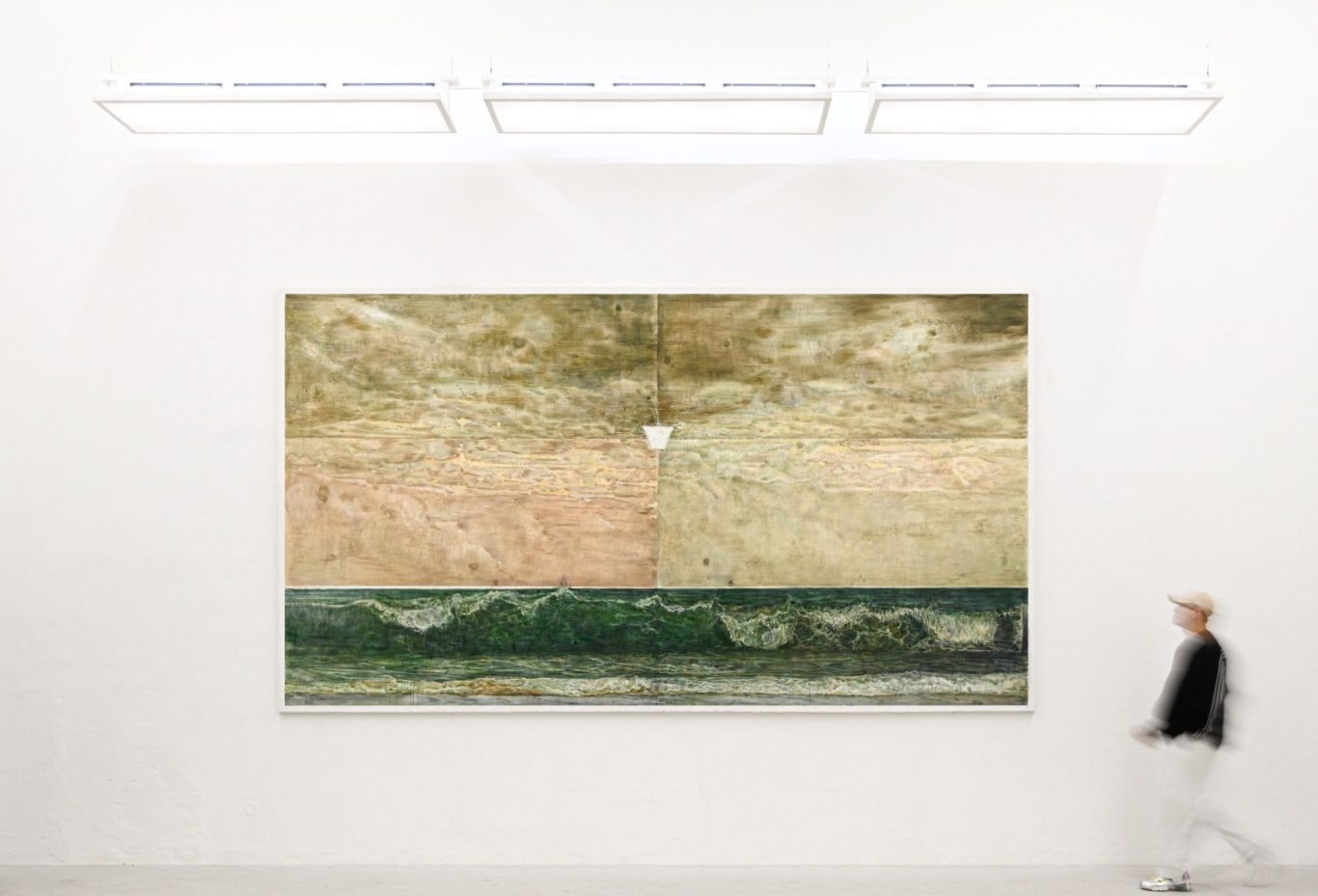
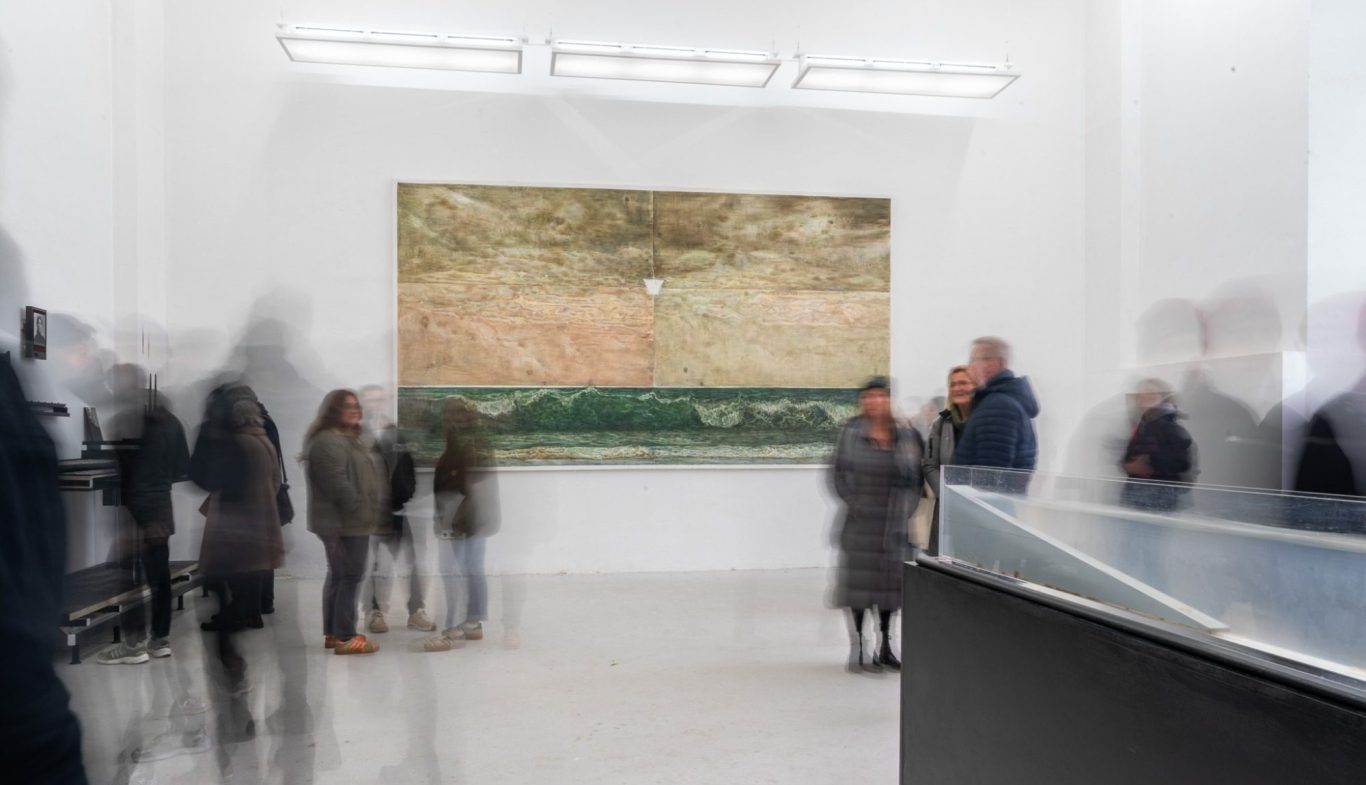
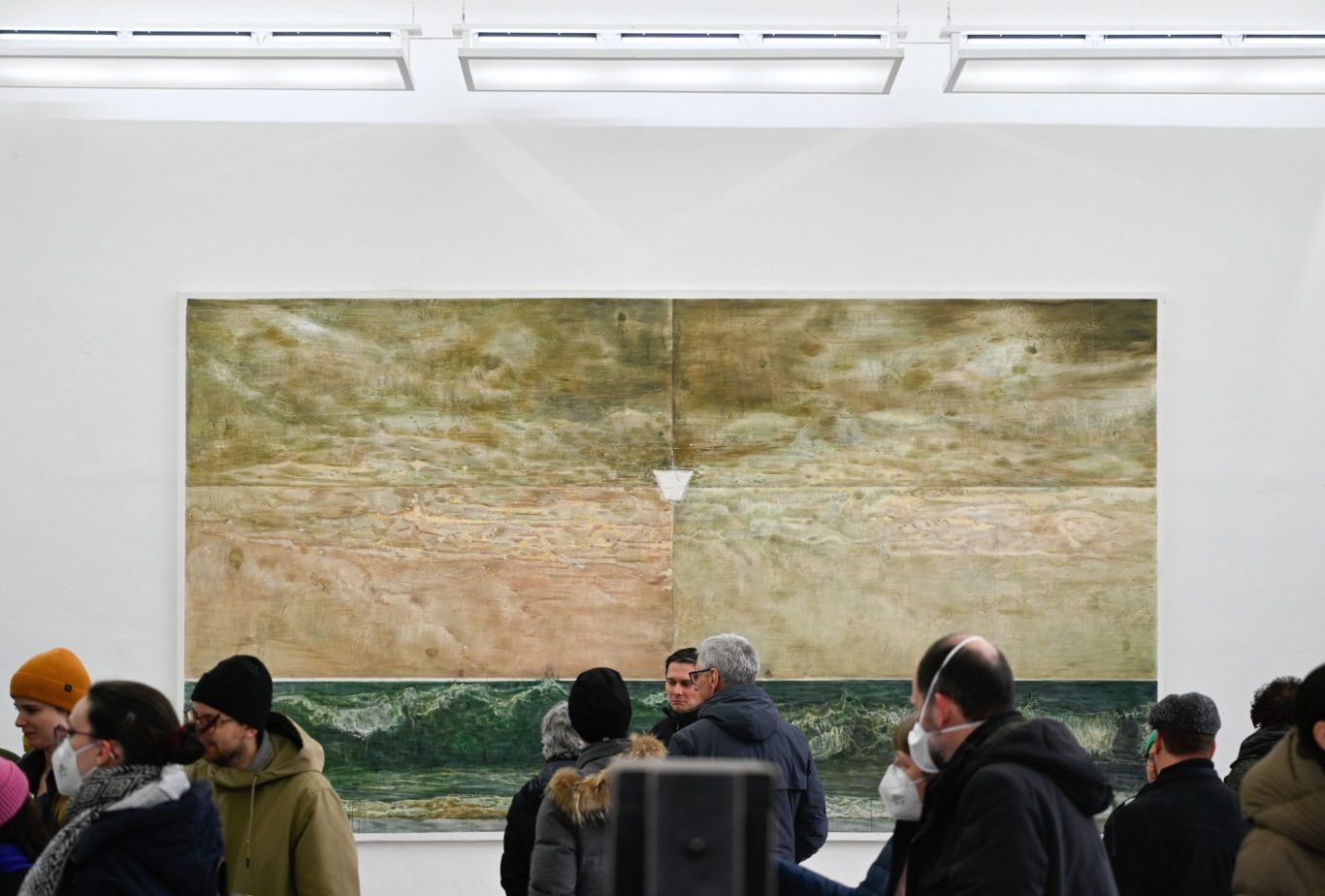
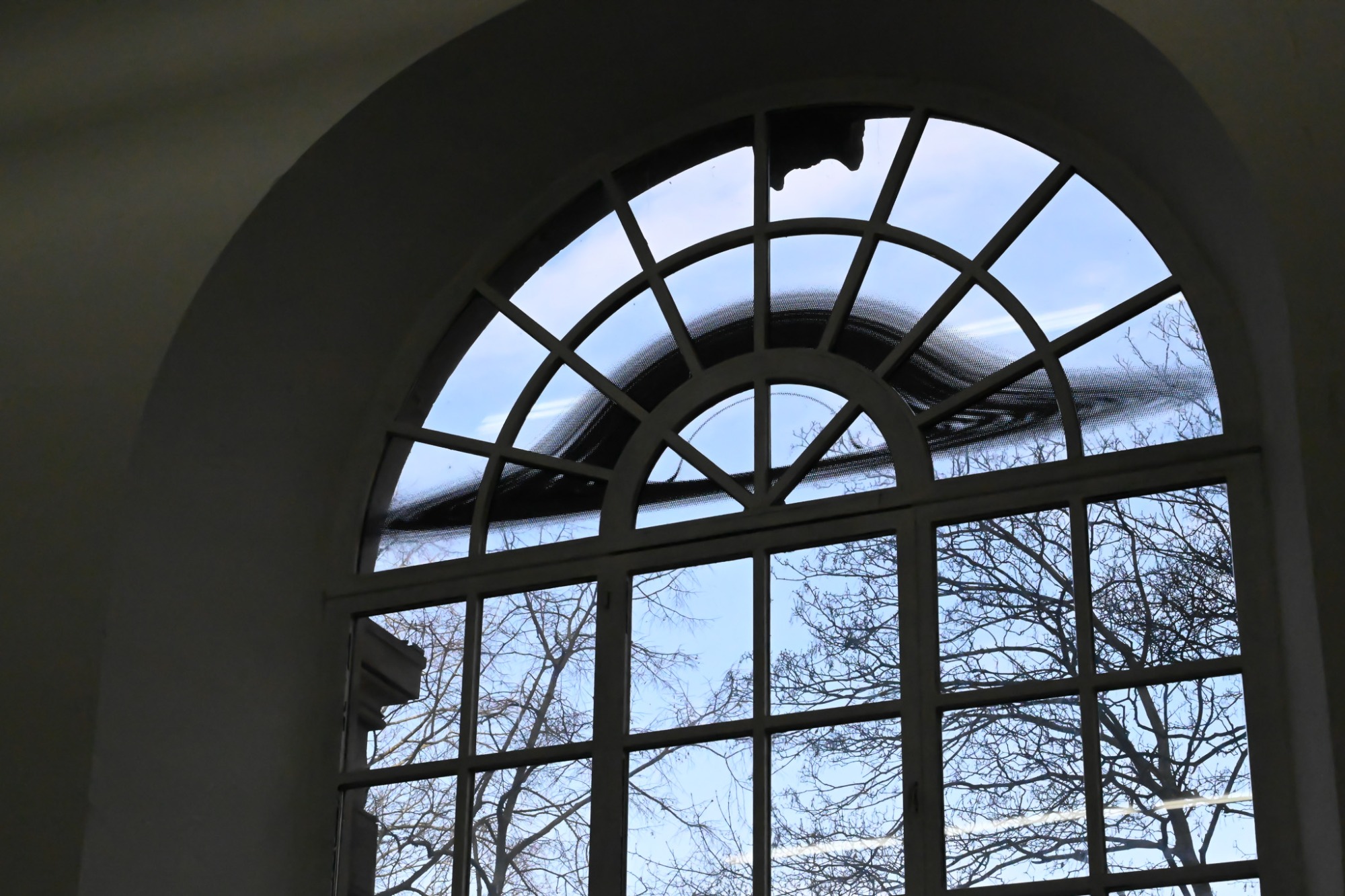
MUTIVATION,2024-25, Oil and acrylic on canvas, UV-Folie, LED-lights, 280 × 500 cm
I hope that when you look at this painting, other images come to mind—that’s exactly why it was created. Its purpose is to “evoke.” A kind of ancient memory. Imagine people in the Stone Age, preparing to set sail for the first time, looking out at the endless ocean—what were they thinking? They were imagining something beyond their sight. Their minds lit up with an image, and this function became the primal motivation for painting. The motivation wasn’t religion or magic—it was the brain’s function, a single thought.
05 | PORTAL
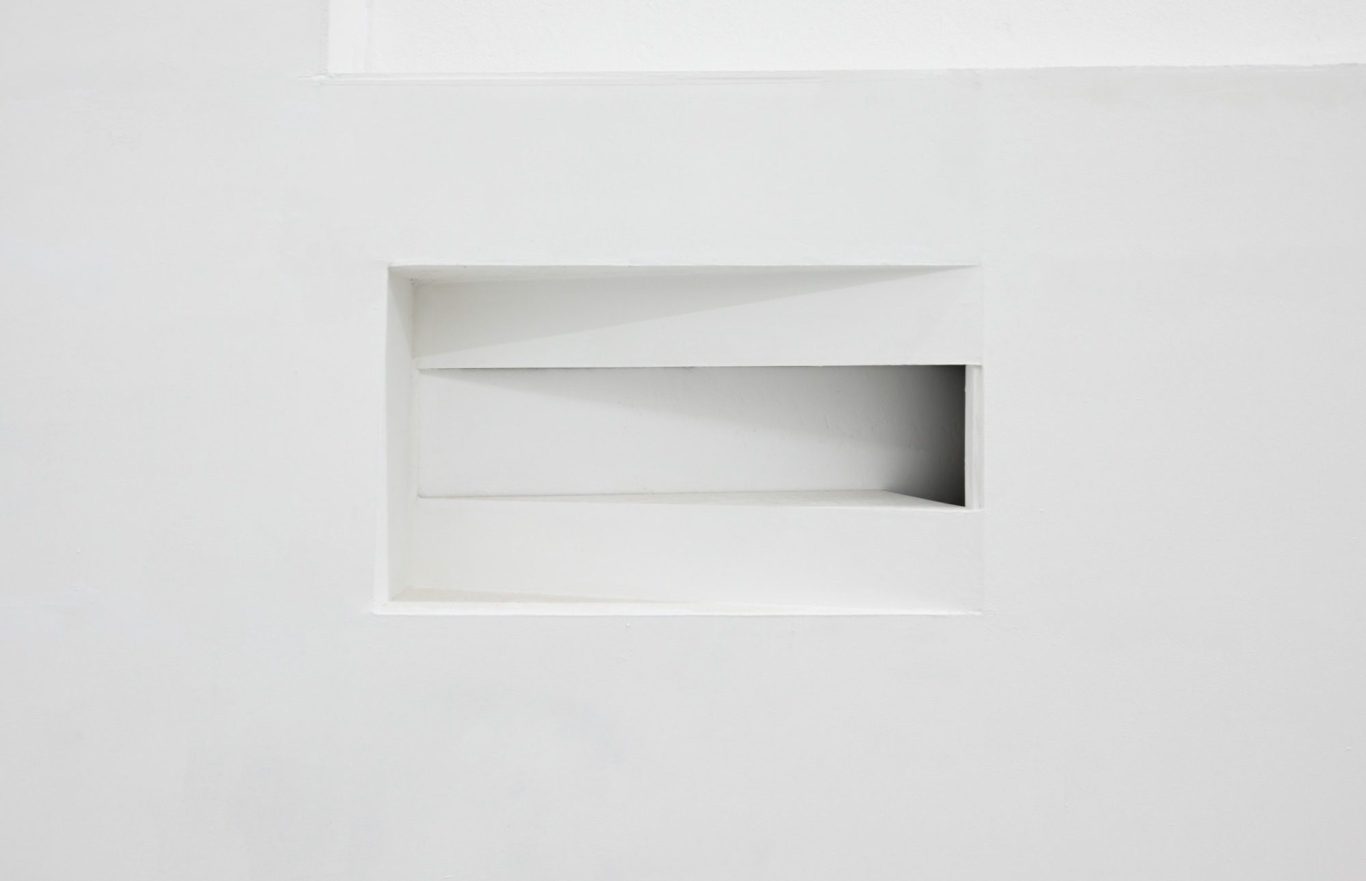
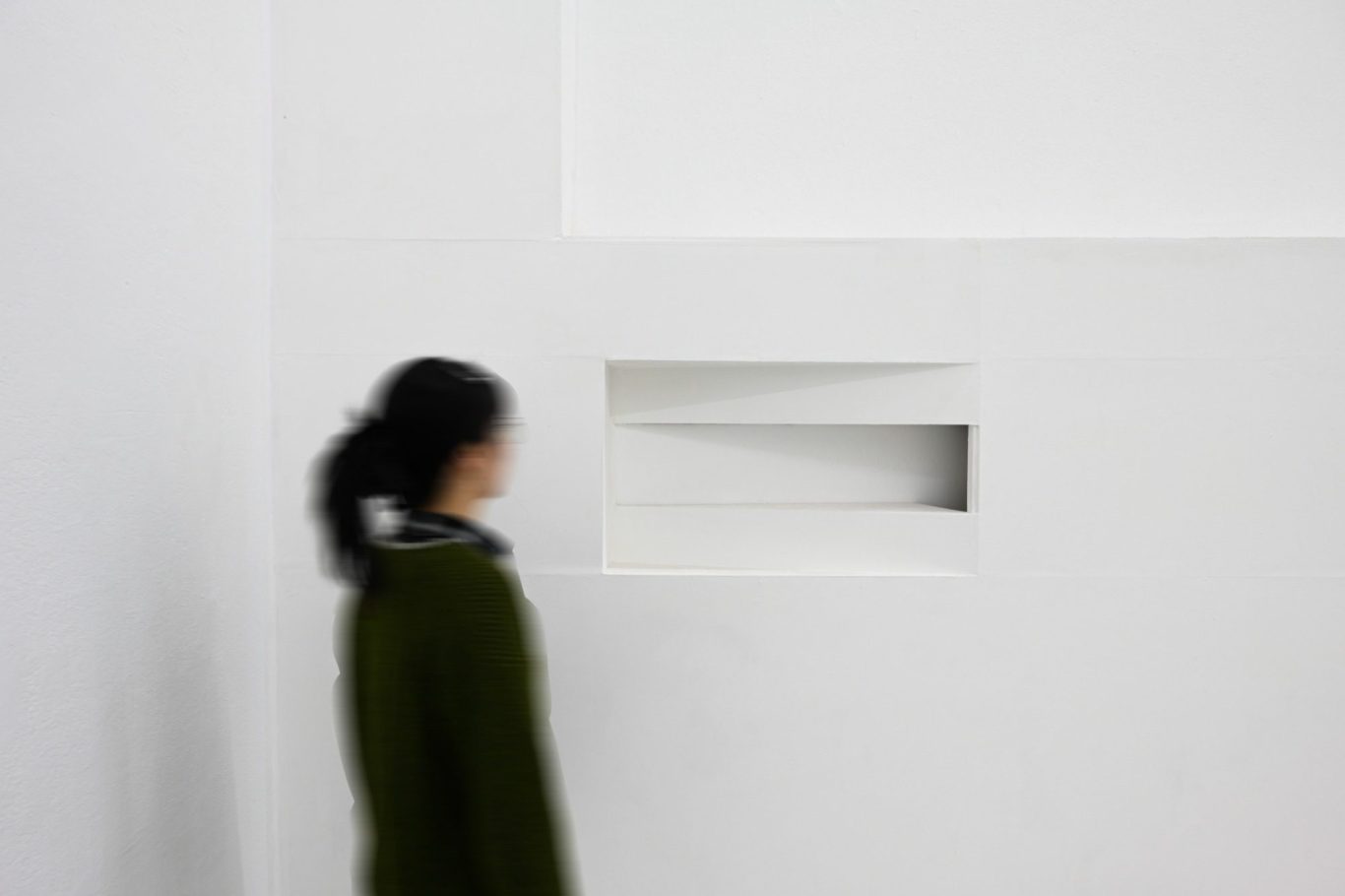
PORTAL, 2024-25 ,Wood panel, variable dimensions
06 | THE WONDROUS BEING OF TURE EMPTINESS
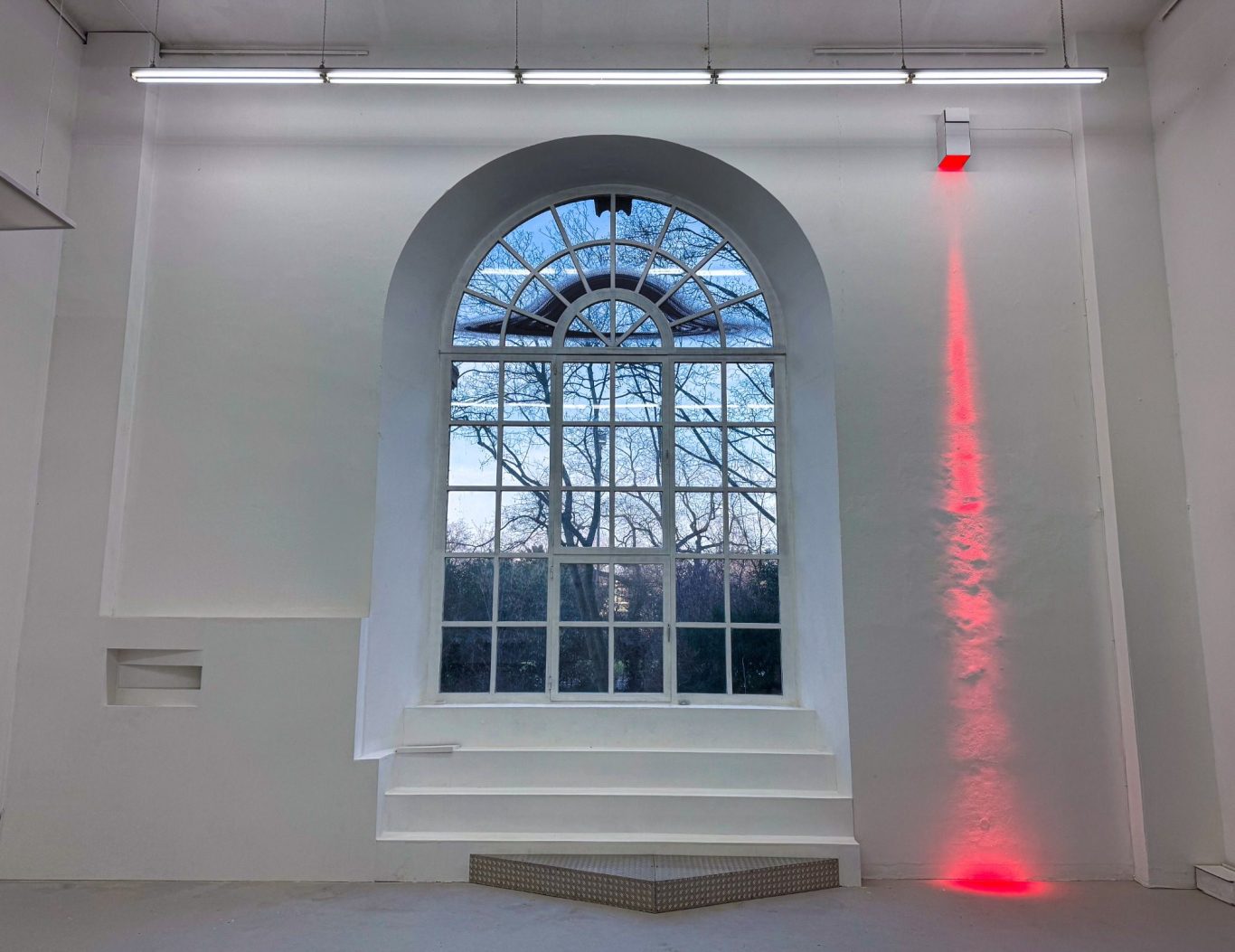
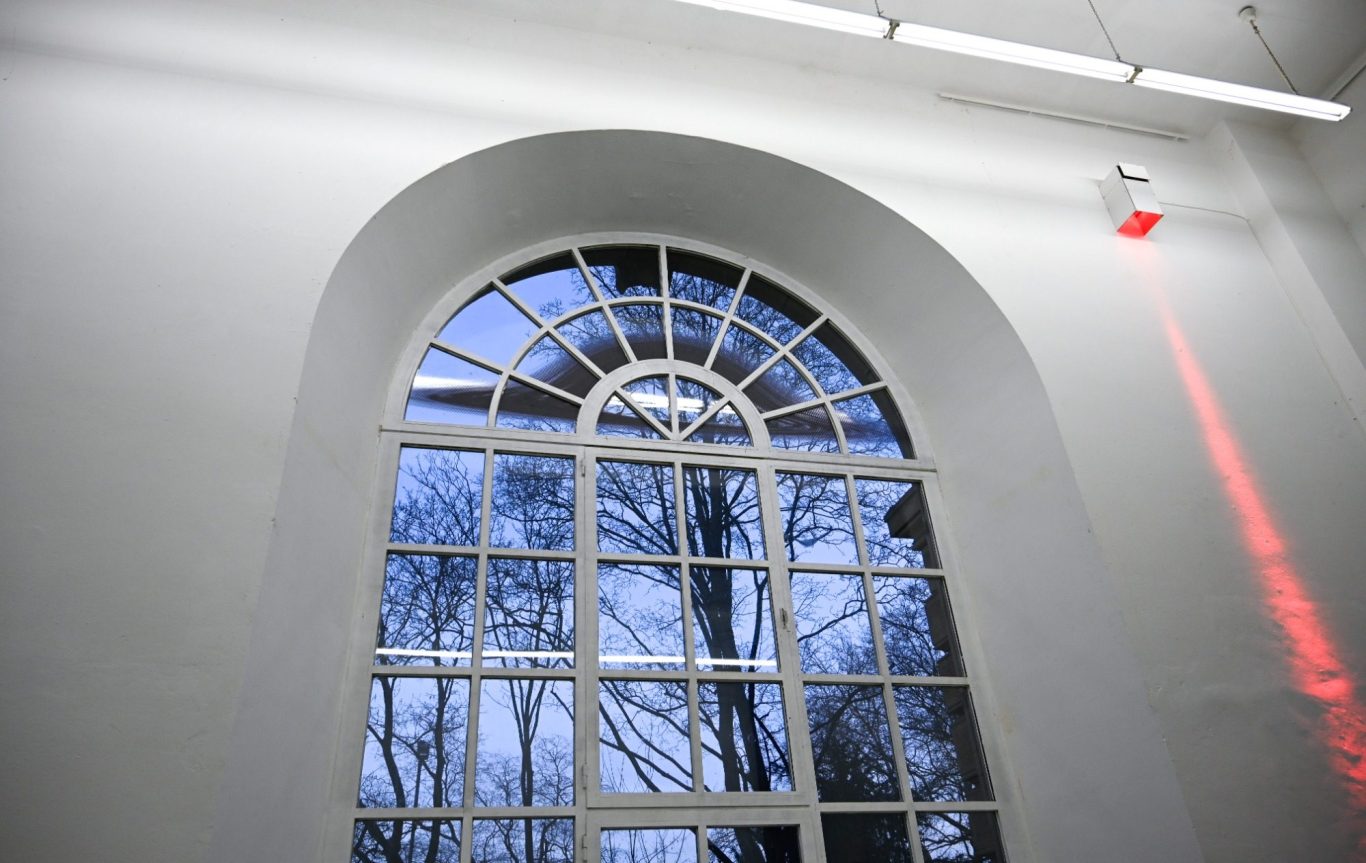
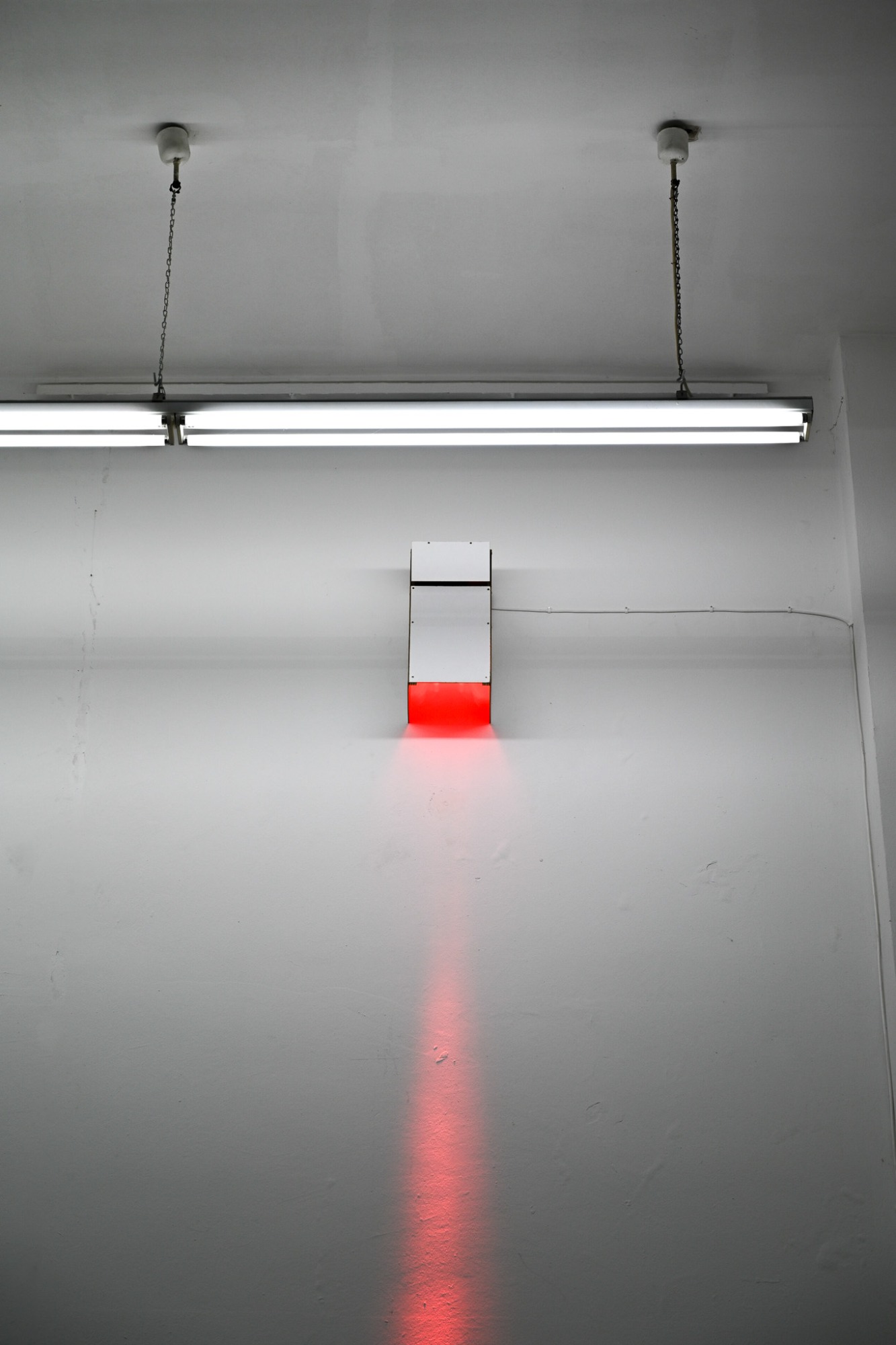
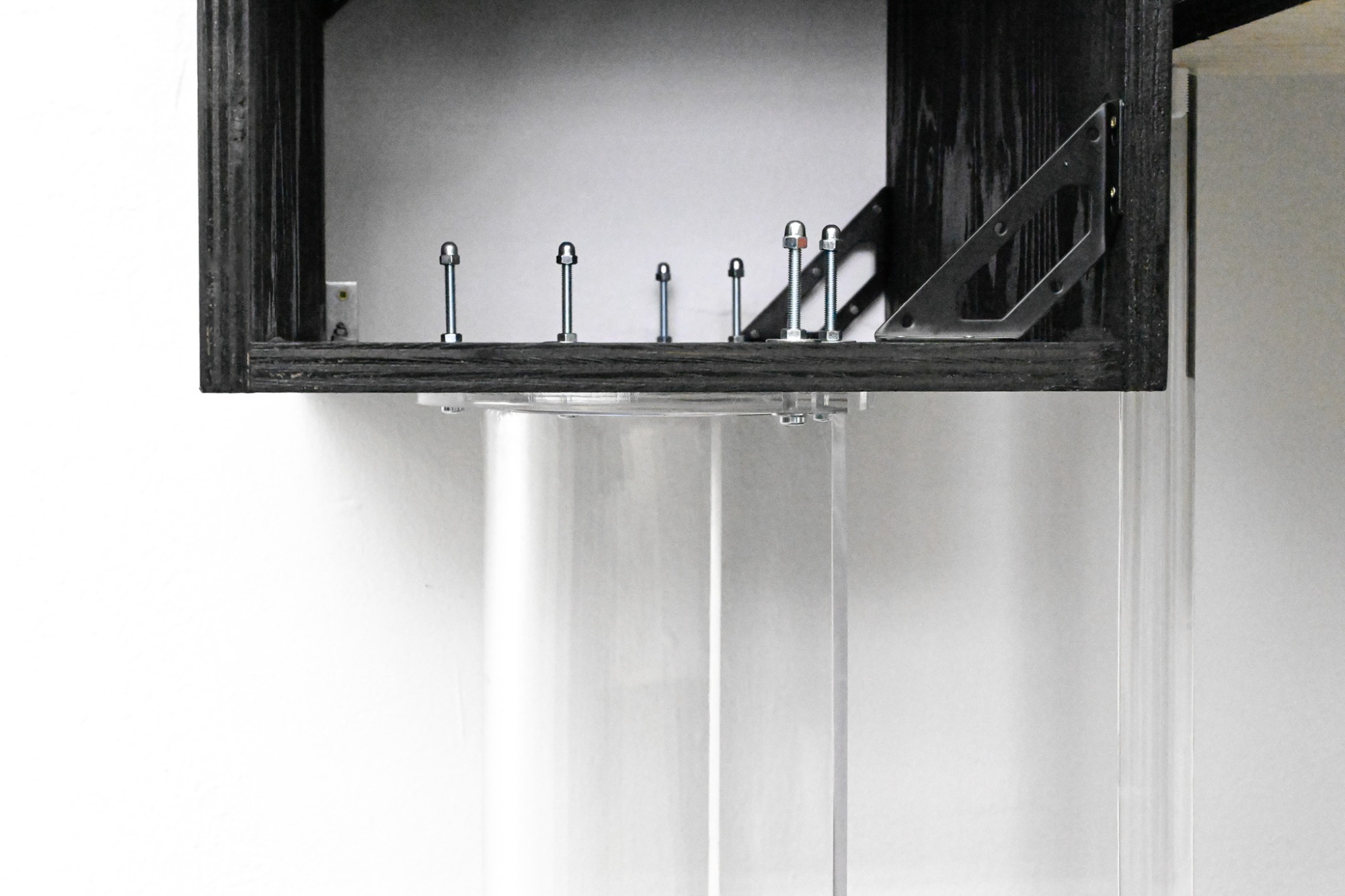
THE WONDROUS BEING OF TURE EMPTINESS, 2024-25,Wood panel, red spotlight, stainless steel, print auf OHP-Folie, variable dimensions
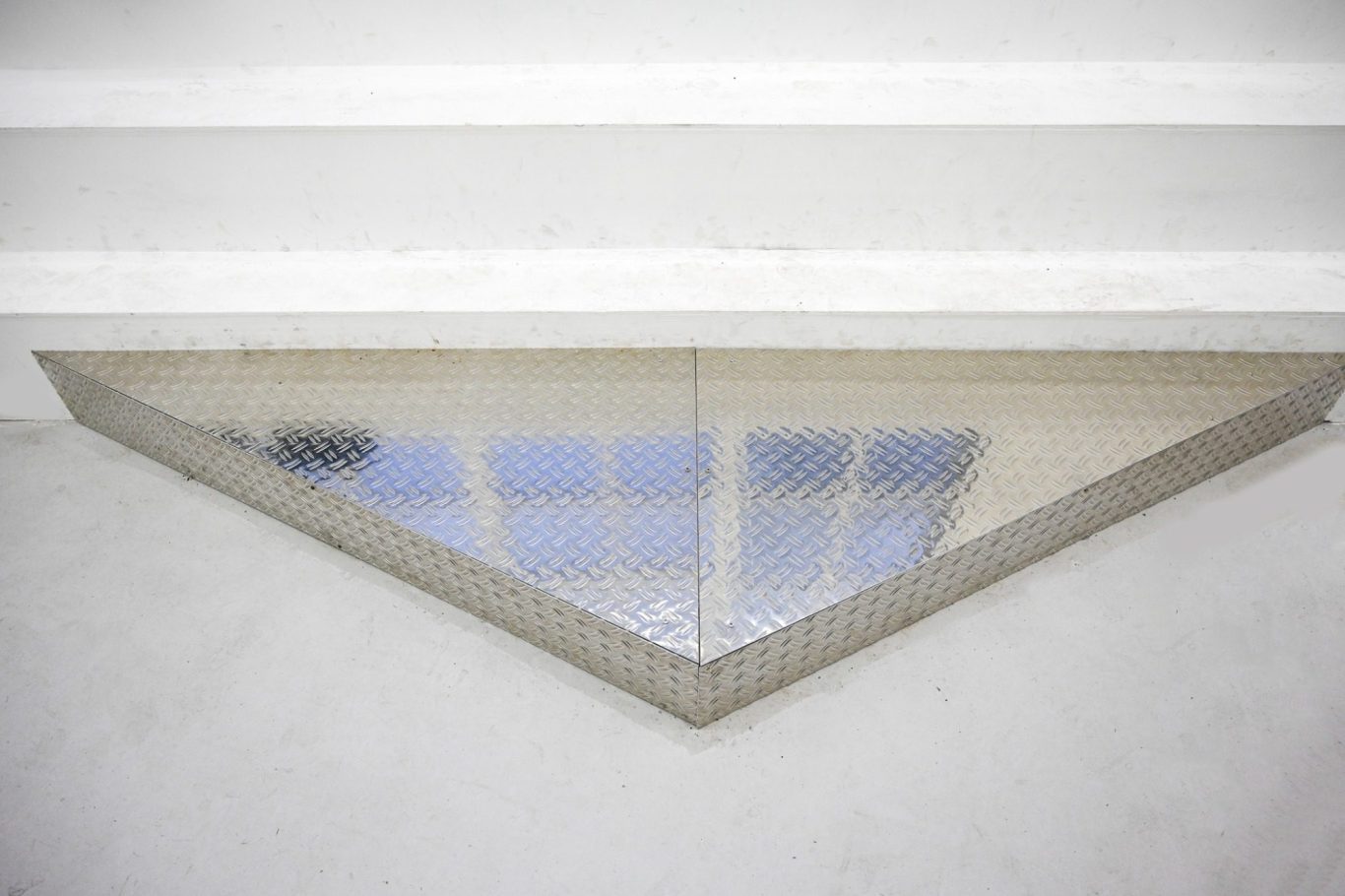
This entire wall is essentially a large “Vanitas motif,” transforming a 17th-century still-life theme into an installation.In the past, such worksserved as a form of warning and self-reflection—for instance, a reminder that all beautiful things and pleasures will inevitably face death and an end, revealing their illusory nature.
The Chinese translation of “Vanitas” incorporates the concept of “emptiness” (“空”). Here, “emptiness” means having nothing, but at a higher level, it suggests that there is still something within the void— content exists even in emptiness.For artists, creating art is a kind of pleasure. When we choose a form of expression, we already place ourselves in a position where we might have to confront the void.I wonder if this pleasure itself will also face an end. Do our emotions, memories, and experiences have a destination? I chose the black hole as a symbol because it represents an object of infinite mass that can trap even light. It is both a void and the opposite of a void. That is why we must continue creating. We will die, our works will disappear, but the universe will retain what it finds useful.
07 | SPACESHIP
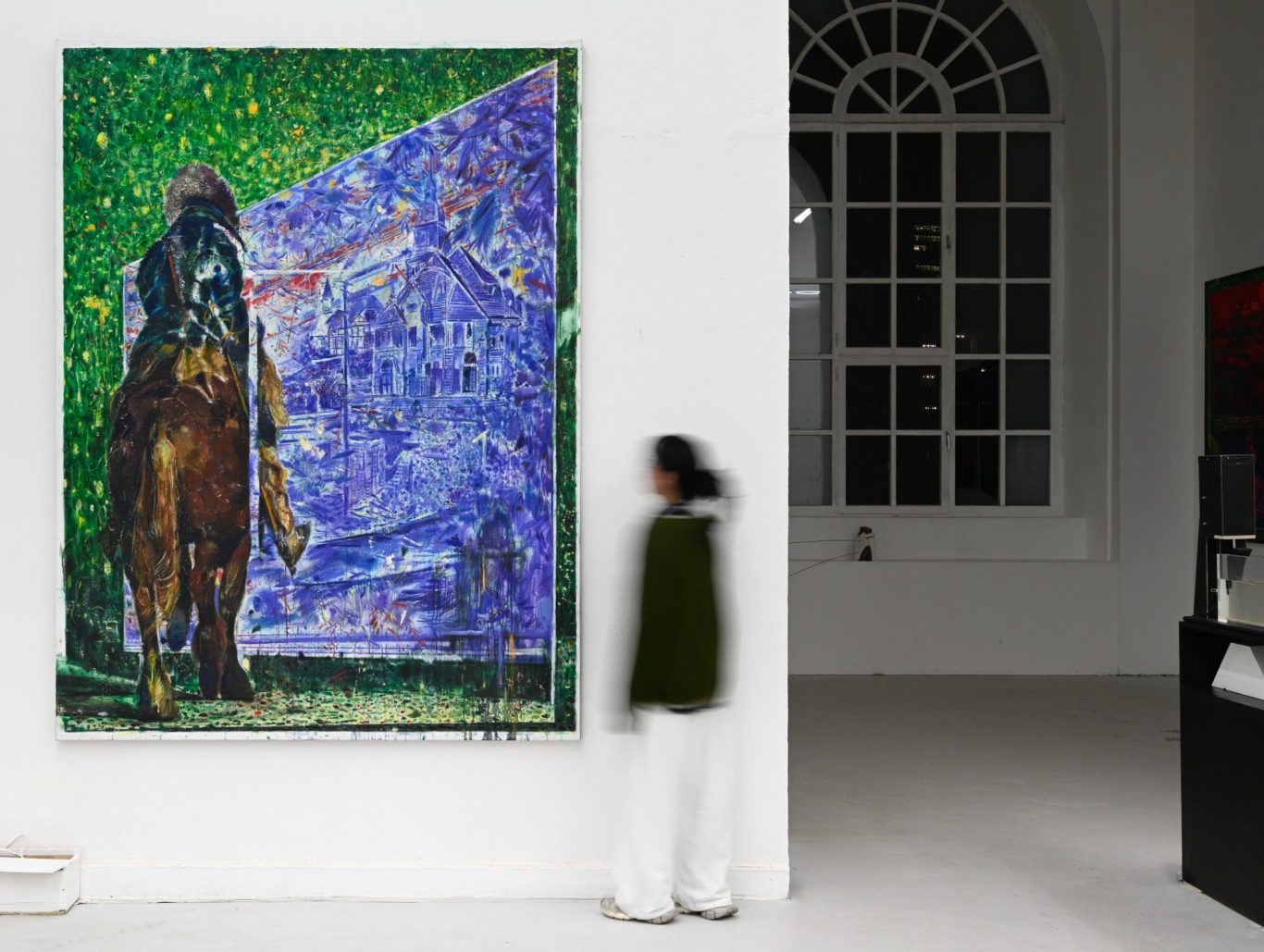
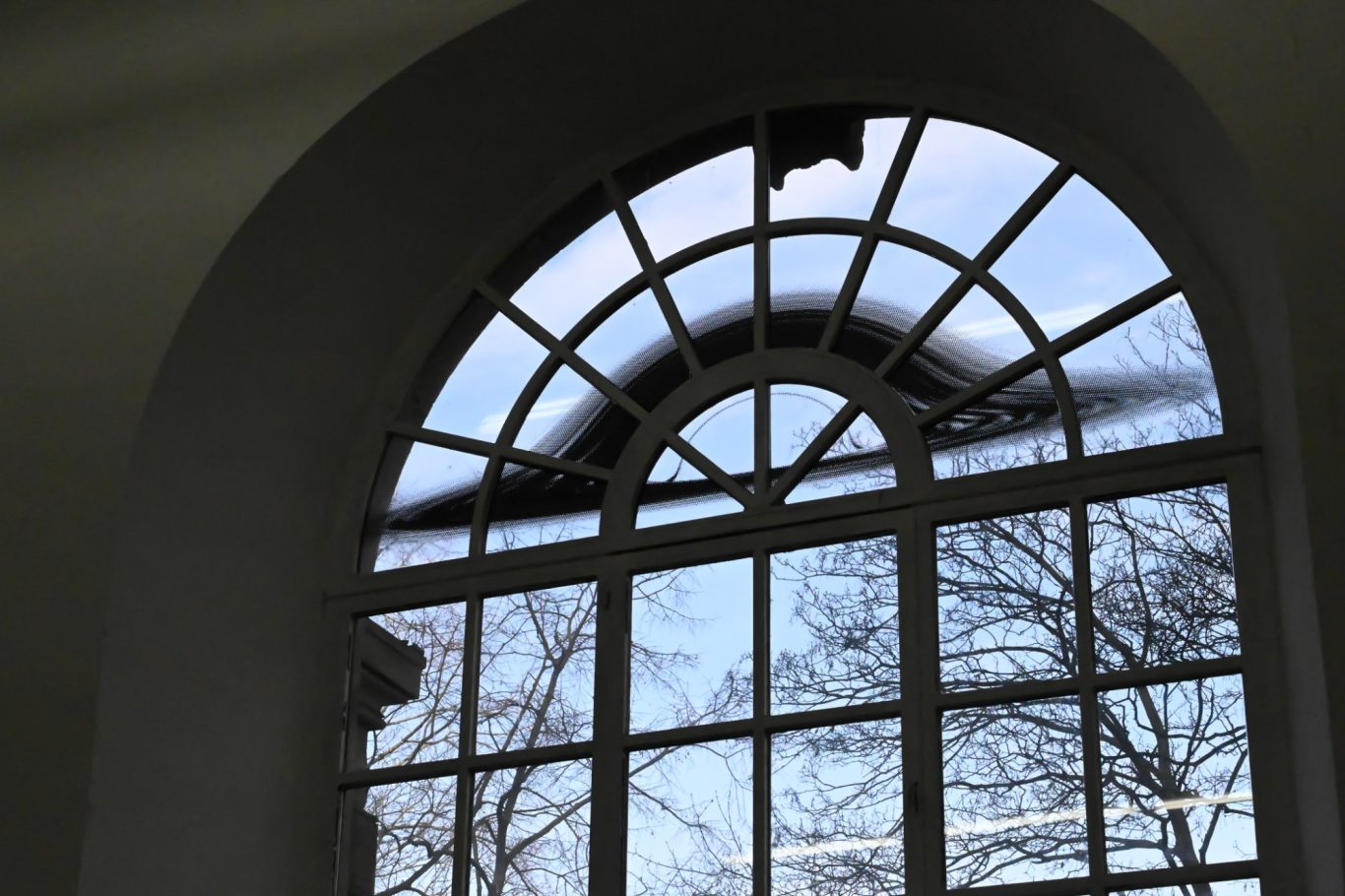
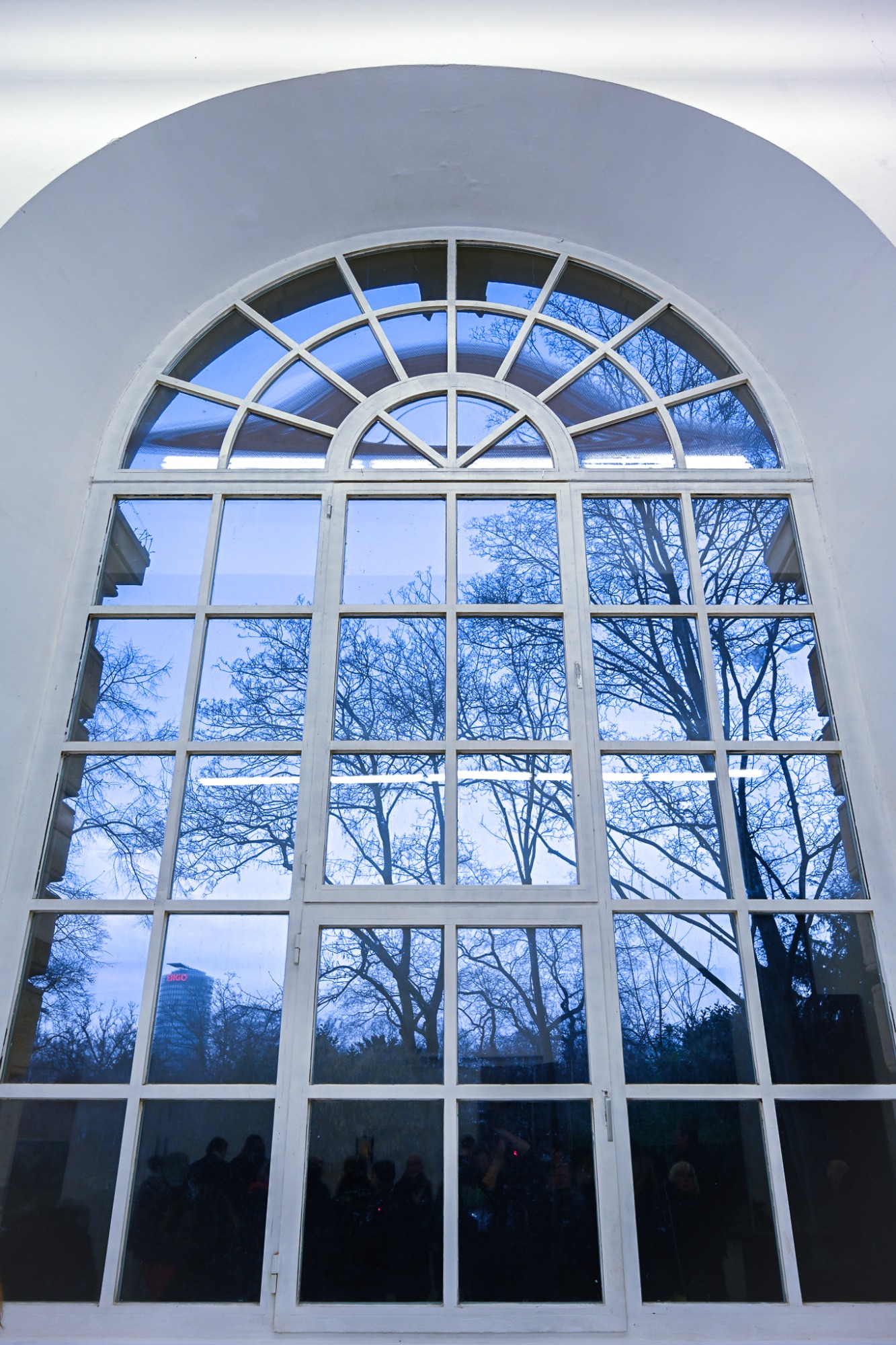
SPACESHIP, 2024, Oil and acrylic on canvas, 350 × 240 cm